
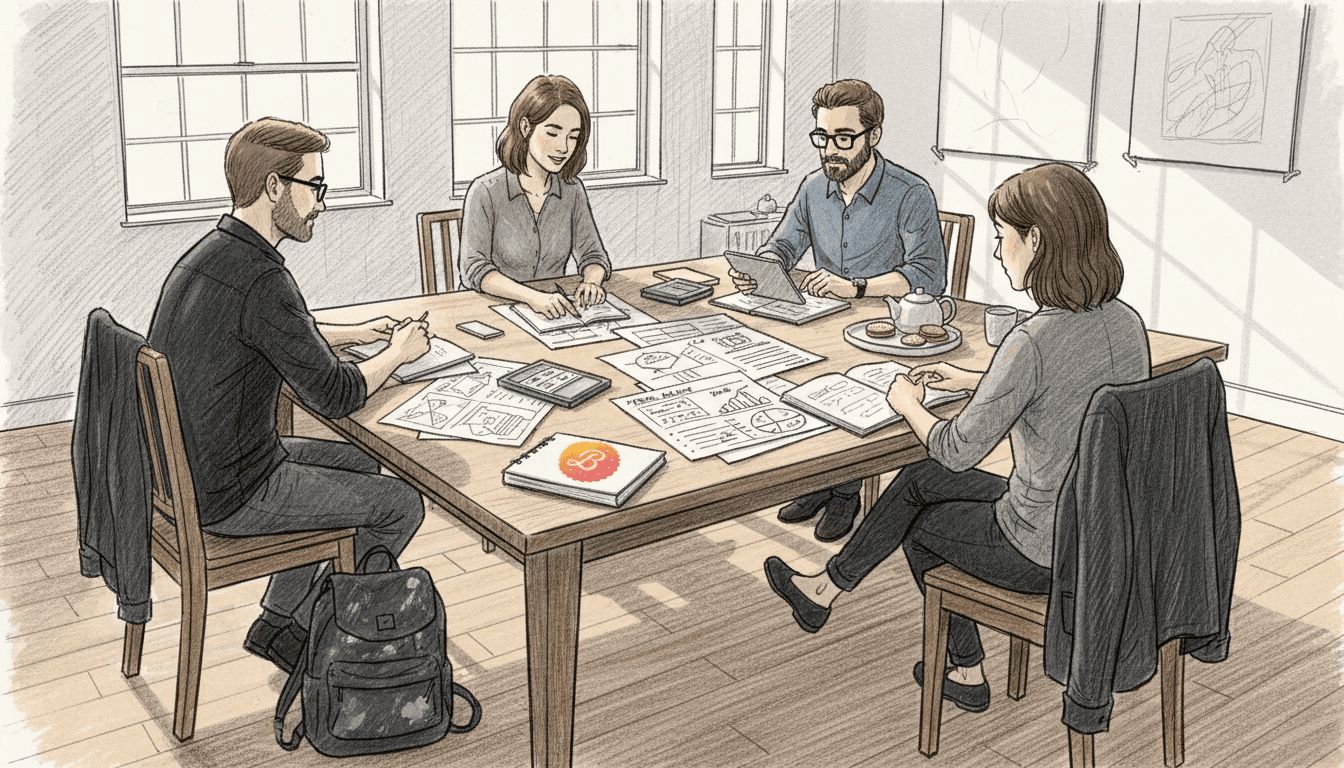
Many Irish creative entrepreneurs believe workshops are costly, generic, or irrelevant to their artistic pursuits. Yet 40% avoid workshops due to these misconceptions, missing critical opportunities to master pricing, build networks, and grow sustainable businesses. This guide reveals how tailored workshops transform creative skills into profitable ventures through practical strategies, community support, and expert mentorship designed specifically for Irish creatives.
Key Takeaways
| Point | Details |
|---|---|
| Business Strategy Impact | Workshops deliver tailored planning and sales strategies that enable creative entrepreneurs to build sustainable, diversified income streams. |
| Pricing Mastery | Pricing workshops improve accuracy and profitability by 30% through value-based models and psychology. |
| Community Strength | 70% of participants cite increased confidence from peer support networks built during workshops. |
| Misconception Barrier | False beliefs about cost and relevance prevent 40% of Irish creatives from accessing workshop benefits. |
| Sustained Success | Programs with mentorship achieve 25% higher success rates than one-off events. |
Introduction: Why Workshops Matter for Creative Entrepreneurs in Ireland
Creative entrepreneurs in Ireland often face gaps between their artistic skills and necessary business knowledge. You might excel at your craft but struggle with pricing products, planning growth, or building sustainable revenue. This disconnect leaves many talented makers undervaluing their work and missing opportunities.
Workshops tailored specifically for creatives bridge this gap by addressing the unique challenges you face:
- Strategic planning that respects creative practice while building commercial viability
- Pricing confidence through frameworks designed for handmade and artistic products
- Network access that reduces isolation common among solo creative entrepreneurs
- Practical sales strategies adapted to creative markets and customer psychology
The creative hub at The Biscuit Factory recognizes these needs. Traditional business training rarely accounts for the emotional labour, time intensity, and material costs inherent in creative work. Generic advice falls flat when you're calculating the value of hand embroidery or pricing limited edition prints.
Participating in workshops creates peer connections with others who understand your challenges. You gain practical tools immediately applicable to your business. Most importantly, you build confidence in your commercial decisions while maintaining artistic integrity.
Business Strategies Delivered Through Workshops
Workshops equip you with strategic frameworks specifically adapted to creative businesses. Unlike corporate planning models, these strategies account for seasonal demand, custom orders, and the portfolio approach many makers use.
Strategic planning sessions help you:
- Define clear revenue goals aligned with your creative capacity and lifestyle preferences
- Map product lines that balance passion projects with commercial offerings
- Identify market positioning that distinguishes your work in crowded creative sectors
- Plan sustainable growth without sacrificing quality or burning out
Sales strategies receive particular focus because many creatives feel uncomfortable with promotion. Workshops reframe selling as service, helping you communicate value authentically. You learn to identify ideal customers, craft compelling product stories, and close sales confidently.
Irish creatives report up to 35% of income deriving from workshops and teaching engagements. This diversification strategy emerged from business planning workshops where participants recognized their expertise as a revenue stream. Teaching your craft creates recurring income while building authority in your niche.
"The strategic planning workshop helped me see my business as a portfolio, not just product sales. Now I balance custom commissions, ready-made items, and teaching for stable income throughout the year." — Workshop participant
The creative entrepreneurs community provides ongoing support for implementing these strategies. You gain accountability partners and feedback loops that keep plans moving forward beyond the workshop day.
Pricing Strategies: Finding the Right Price Point
Pricing remains the most common pain point for creative entrepreneurs. You pour hours into each piece but struggle to charge appropriately. Workshops address this through structured pricing methods that combine hard costs with value perception.
Two primary models receive focus:
| Pricing Model | Best For | Key Benefit |
|---|---|---|
| Cost-Plus | Products with consistent materials and time investment | Ensures profit margin on every sale |
| Value-Based | Unique pieces, custom work, established brand | Captures premium pricing for perceived value |
| Hybrid | Most creative businesses | Balances profitability with market positioning |
Cost-plus pricing calculates material costs, labour hours, and overhead, then adds your desired profit margin. This foundation ensures you never sell at a loss. However, it often undervalues creative expertise and brand equity.
Value-based pricing considers what customers will pay based on perceived worth. Workshops teach you to identify and communicate value drivers like craftsmanship quality, unique design, limited availability, and emotional connection. Pricing workshops improve accuracy and profitability by 30% by helping creatives confidently implement these strategies.
Pricing psychology receives detailed attention. You learn anchoring techniques, tiered product offerings, and how to present prices that feel accessible while maintaining margins. The goal is not just higher prices but appropriate pricing that reflects true value.
Pro Tip: Use the pricing calculator tool after workshops to implement learnings immediately. Calculate costs, set margins, and test different pricing scenarios for your product range.
Workshops also address the emotional challenge of raising prices. Many participants report feeling guilty about charging more, even when their pricing is objectively low. Group discussions normalize appropriate pricing and build confidence to implement changes.
Building Community and Peer Support Through Workshops
Isolation ranks among the top challenges for creative entrepreneurs working from home studios. You make decisions alone, celebrate wins alone, and troubleshoot problems without feedback. This isolation erodes confidence and limits growth.

70% of workshop participants cite increased confidence and perceived peer support as key business benefits. The community dimension often proves as valuable as technical content. You meet others facing similar challenges, share solutions, and build lasting professional relationships.
Workshops create structured networking that feels natural for introverts and relationship builders alike. Small group discussions around shared challenges break down barriers faster than traditional networking events. You exchange contact information with genuine intent to stay connected.
Government initiatives support community building. The Creative Ireland Programme fosters collaboration via local creative workshops across 31 Irish local authorities. These programmes recognize that creative sector success depends on strong networks and peer learning.
Peer support extends beyond workshop days:
- Accountability partnerships keep you progressing on goals
- Skill exchanges allow creatives to trade services and reduce costs
- Collaborative projects create opportunities larger than solo work
- Emotional support sustains motivation during challenging periods
The creative peer network continues these connections online. You access a directory of Irish makers for collaboration, ask questions in supportive forums, and celebrate milestones with people who understand the creative entrepreneurship journey.
Community also provides market intelligence. Fellow participants share what's working in their marketing, which craft fairs deliver results, and how they handle difficult customer situations. This collective knowledge accelerates everyone's learning.
Common Misconceptions About Business Workshops for Creatives
Misconceptions create significant barriers to workshop participation. 40% of Irish creative entrepreneurs initially hesitate to attend workshops due to false beliefs about relevance, cost, and audience.
Myth 1: Workshops only suit large companies or established businesses.
Reality: Most creative workshops specifically target solo entrepreneurs and small studios. Content addresses startup challenges like initial pricing, first market entry, and building customer bases from scratch. Facilitators understand creative business stages and tailor examples accordingly.
Myth 2: Business workshops are prohibitively expensive.
Reality: Many workshops are affordable or free, supported by local enterprise offices. Local Enterprise Offices across Ireland subsidize training for small businesses. Creative Ireland programmes often run free workshops through libraries and community centres. Membership platforms like The Biscuit Factory include workshop access in affordable monthly fees.
Myth 3: Workshop content provides generic business advice irrelevant to creative work.
Reality: Specialized workshops address challenges unique to creative entrepreneurship. Topics include portfolio pricing, craft fair strategies, handling custom orders, managing production time, and seasonal demand planning. Facilitators bring creative sector experience and adapt frameworks to artistic contexts.
Myth 4: Successful creatives don't need business training.
Reality: Even thriving creative businesses benefit from fresh perspectives and updated strategies. Markets evolve, customer expectations shift, and new platforms emerge. Workshops provide continuing education and prevent stagnation.
Pro Tip: Research workshop facilitators before attending. Look for instructors with creative business backgrounds who understand your specific challenges rather than generic business coaches.
Clearing these misconceptions increases participation and helps more creatives access growth support. The workshop insights blog provides detailed reviews and previews to help you choose relevant programmes.
Workshop Formats and Sustained Support Models
Workshop formats vary significantly in structure, duration, and ongoing support. Understanding differences helps you choose programmes aligned with your learning style and business needs.
| Format | Duration | Best For | Limitation |
|---|---|---|---|
| One-Off Workshop | Single day or evening | Quick skill acquisition, specific topic focus | Limited follow-up support |
| Multi-Week Programme | 4-8 sessions over months | Deep learning, implementation between sessions | Requires sustained time commitment |
| Membership Model | Ongoing access | Continuous learning, evolving business needs | Requires monthly investment |
| Intensive Bootcamp | 2-3 consecutive days | Complete business overhaul, focused planning | Intense time commitment |
One-off workshops deliver concentrated learning on specific topics. You gain immediate insights and actionable frameworks. However, implementation challenges often arise after the event when you lack ongoing guidance. Questions emerge during application that remain unanswered.
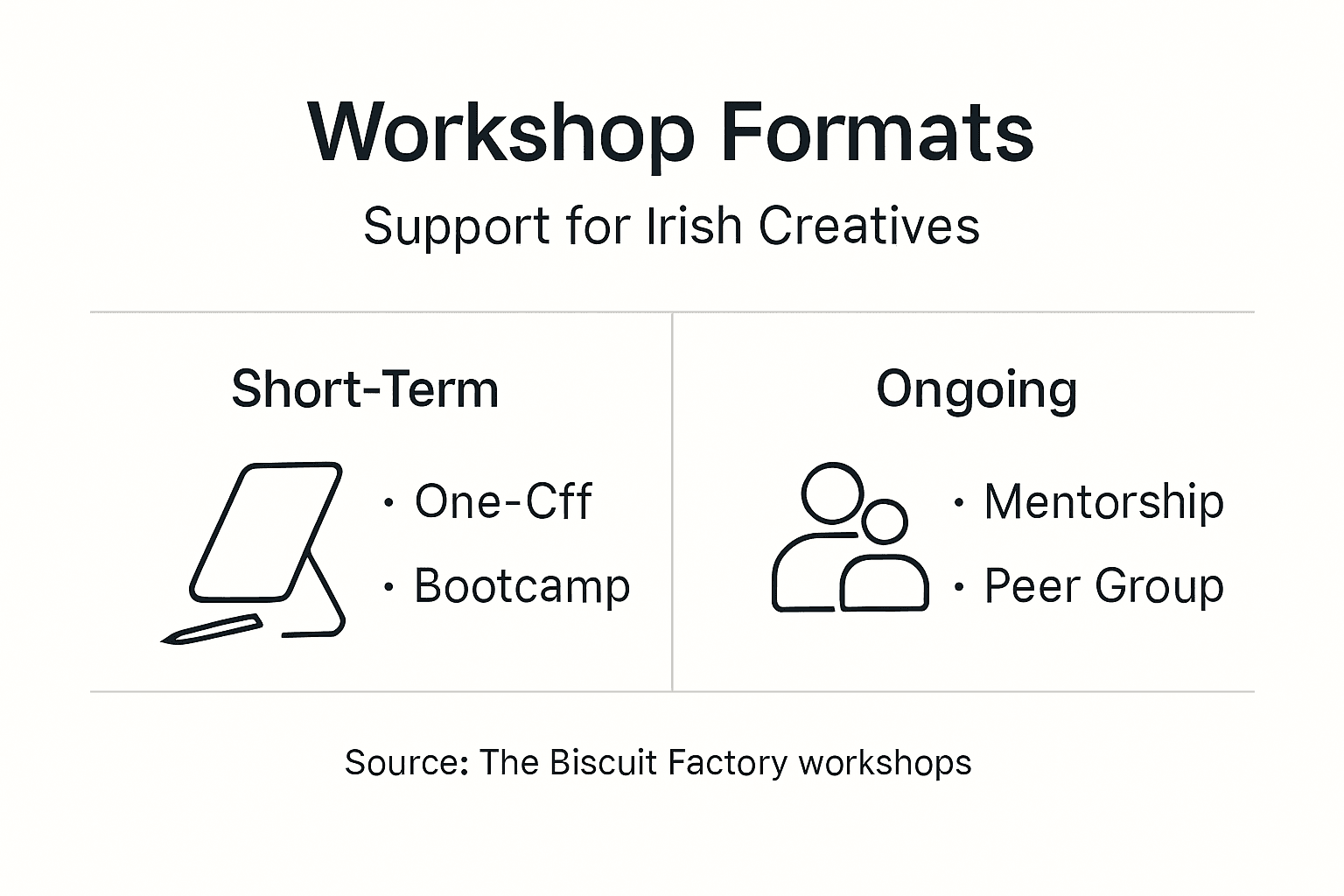
Sustained programmes incorporate mentorship, peer accountability, and implementation support. Sustained workshop programmes with mentorship have a 25% higher success rate than single events. This model recognizes that behaviour change requires time, practice, and feedback.
Membership platforms combine workshop access with continuous resources. The ongoing creative programmes provide monthly workshops, troubleshooting clinics, and template libraries. You learn incrementally while building lasting peer relationships.
Follow-up mechanisms significantly impact results:
- Implementation assignments between sessions drive action
- Group check-ins create accountability and shared learning
- One-on-one coaching addresses individual challenges
- Resource libraries support independent problem-solving
Consider your learning preferences when choosing formats. Some creatives thrive with intensive immersion, while others prefer gradual learning integrated into daily business operations. Both approaches work when matched to your style and current capacity.
Practical Steps to Apply Workshop Learnings for Business Growth
Attending workshops provides value only when you implement learnings. These steps transform workshop insights into measurable business improvements.
-
Map specific learnings to concrete business goals within 48 hours of the workshop. Identify three actions you will complete within one week. Specificity matters: "Implement value-based pricing for custom orders" beats "improve pricing."
-
Activate community networks immediately by scheduling follow-up conversations with two to three participants. Exchange contact information becomes worthless without action. Applying workshop learnings to business models leads to measurable revenue growth and network expansion when paired with peer accountability.
-
Use the profit calculation tool to test new pricing strategies before implementation. Calculate margins across your product range, identify underpriced items, and plan pricing adjustments with confidence.
-
Schedule a review session one month post-workshop to measure impact. Track specific metrics like average order value, conversion rates, or hours spent on business planning. Quantifiable results motivate continued implementation.
-
Connect with the creative network directory to find collaborators, mentors, and accountability partners. Ongoing relationships sustain momentum beyond initial enthusiasm.
Pro Tip: Create a workshop implementation folder containing notes, action plans, and resources. Review monthly to maintain focus and track progress against goals.
Adjust strategies based on results. Not every workshop technique suits your specific business or customer base. Test, measure, and refine approaches while maintaining the core principles learned. Implementation is iterative, not one-and-done.
Common implementation obstacles include time scarcity, overwhelm from too many ideas, and fear of customer reaction to changes. Address these by starting small, choosing one priority area, and communicating changes confidently to your audience.
Discover Opportunities with The Biscuit Factory
You've seen how workshops transform creative businesses through strategic planning, pricing mastery, and community support. Now take the next step in your growth journey.
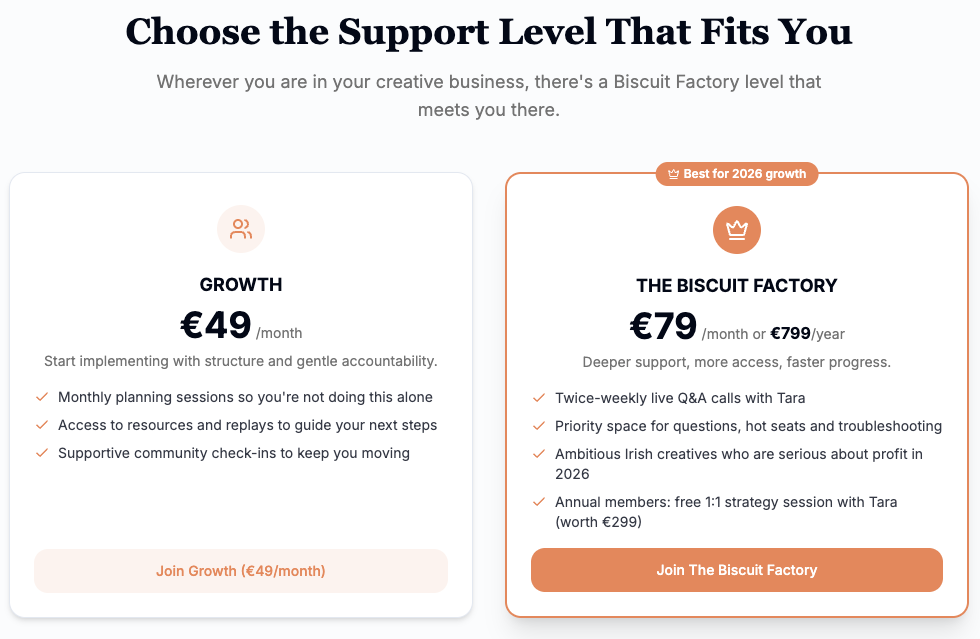
The Biscuit Factory provides comprehensive support designed specifically for Irish creative entrepreneurs. Access monthly workshops covering pricing, marketing, sales strategies, and business planning tailored to makers and artists. Ongoing mentorship ensures you implement learnings with expert guidance rather than struggling alone.
Join the creative community to connect with hundreds of Irish makers facing similar challenges and celebrating shared wins. Use practical tools like the Pricing & Profit Calculator to make confident business decisions backed by solid numbers. Explore The Biscuit Factory to discover membership options, upcoming workshops, and free resources that support your sustainable creative business growth in 2026 and beyond.
FAQs About Workshops for Creative Entrepreneurs in Ireland
Are workshops affordable for small creative businesses in Ireland?
Yes, many workshops are affordable or free, supported by local enterprise offices throughout Ireland. Local Enterprise Offices provide subsidized training for small businesses and startups. Creative Ireland programmes often run free workshops through libraries and community centres, making business education accessible regardless of budget. Membership platforms offer bundled workshop access at monthly rates lower than single event costs. Explore affordable creative business workshops to find options matching your budget and learning goals.
How do workshops help improve pricing strategies for creative products?
Workshops teach you to balance production costs with customer perceived value rather than relying solely on materials and time. Pricing workshops increase accuracy and profitability by up to 30% by introducing value-based frameworks, pricing psychology, and tiered offering strategies. You learn to communicate value effectively, build confidence in premium pricing, and create pricing structures that support sustainable profit margins. The pricing & profit tool helps implement workshop learnings with calculated precision.
What kinds of ongoing support are available after workshops?
Many quality programmes include follow-up coaching, peer group meetings, and implementation resources beyond the initial workshop day. Sustained mentorship programmes result in 25% higher success rates than standalone events because they provide accountability and troubleshooting support during implementation. Membership models offer continuous access to coaching clinics, resource libraries, and community forums where you can ask questions as challenges arise. This ongoing mentorship transforms workshop insights into lasting business improvements through consistent expert guidance and peer accountability.
How do I choose the right workshop for my creative business stage?
Match workshop content to your current challenges and goals rather than aspirational topics. Beginners benefit from fundamentals like pricing basics, first market entry, and legal setup workshops. Established businesses gain more from advanced topics like scaling production, wholesale strategies, or team building. Read workshop descriptions carefully for prerequisite knowledge or target audience indicators. Ask facilitators directly whether content suits your situation. The workshop insights blog provides detailed previews helping you select programmes aligned with your specific needs and business development stage.