

Growing a design business in Ireland means more than just talent and hard work. For many Irish creatives, the real challenge is forming professional networking relationships that lead to lasting partnerships and a steady flow of new opportunities. Networking in the design world goes beyond collecting business cards or online connections. This guide spotlights how meaningful connections and direct community support can transform your creative ventures, helping you tap into new collaborations and practical ways to stand out in the industry.
Table of Contents
- Defining Networking in the Design Industry
- Types of Designer Networking Opportunities
- How Networking Drives Career Growth
- Collaboration, Mentorship, and Peer Support
- Building Client Relationships Through Networking
- Common Networking Pitfalls to Avoid
Key Takeaways
| Point | Details |
|---|---|
| Strategic Networking Is Vital | Networking in the design industry develops meaningful professional relationships that can enhance career trajectories and create business opportunities. |
| Diverse Networking Avenues | Designers can connect through in-person events, online platforms, and community forums, each offering unique benefits for building relationships. |
| Authentic Engagement Is Crucial | Approach networking as a long-term investment, focusing on genuine interest, mutual respect, and skill sharing to foster professional connections. |
| Avoid Common Pitfalls | Successfully navigate networking by following up, listening actively, and maintaining a collaborative mindset rather than a transactional approach. |
Defining Networking in the Design Industry
Networking in the design industry represents a strategic approach to building professional relationships that extend far beyond simple social interactions. At its core, professional networking is about creating meaningful connections that can transform career trajectories and business opportunities. Building genuine professional relationships involves deliberately cultivating connections with peers, potential clients, and industry leaders.
In the design world, networking isn't just about exchanging business cards or making surface-level connections. It's a nuanced process of establishing trust, demonstrating value, and creating mutually beneficial professional relationships. Design professionals can leverage networking through multiple channels:
- Industry conferences and design events
- Online professional platforms
- Local creative meetups
- Design workshops and collaborative projects
- Specialized design community forums
The strategic importance of networking becomes evident when understanding its multifaceted benefits. Academic networking approaches highlight that meaningful connections accelerate career development and create opportunities for cross-disciplinary collaboration. By actively engaging with other design professionals, individuals can unlock insights, discover potential project partnerships, and stay informed about emerging industry trends.
Successful networking requires a proactive and genuine approach. It's about demonstrating authentic interest in others' work, sharing knowledge generously, and building relationships based on mutual respect and professional curiosity. Designers who master networking understand that every interaction is an opportunity to learn, grow, and potentially create future collaborative ventures.
Pro tip: Approach networking as a long-term investment in your professional ecosystem, focusing on quality connections over quantity of contacts.
Types of Designer Networking Opportunities
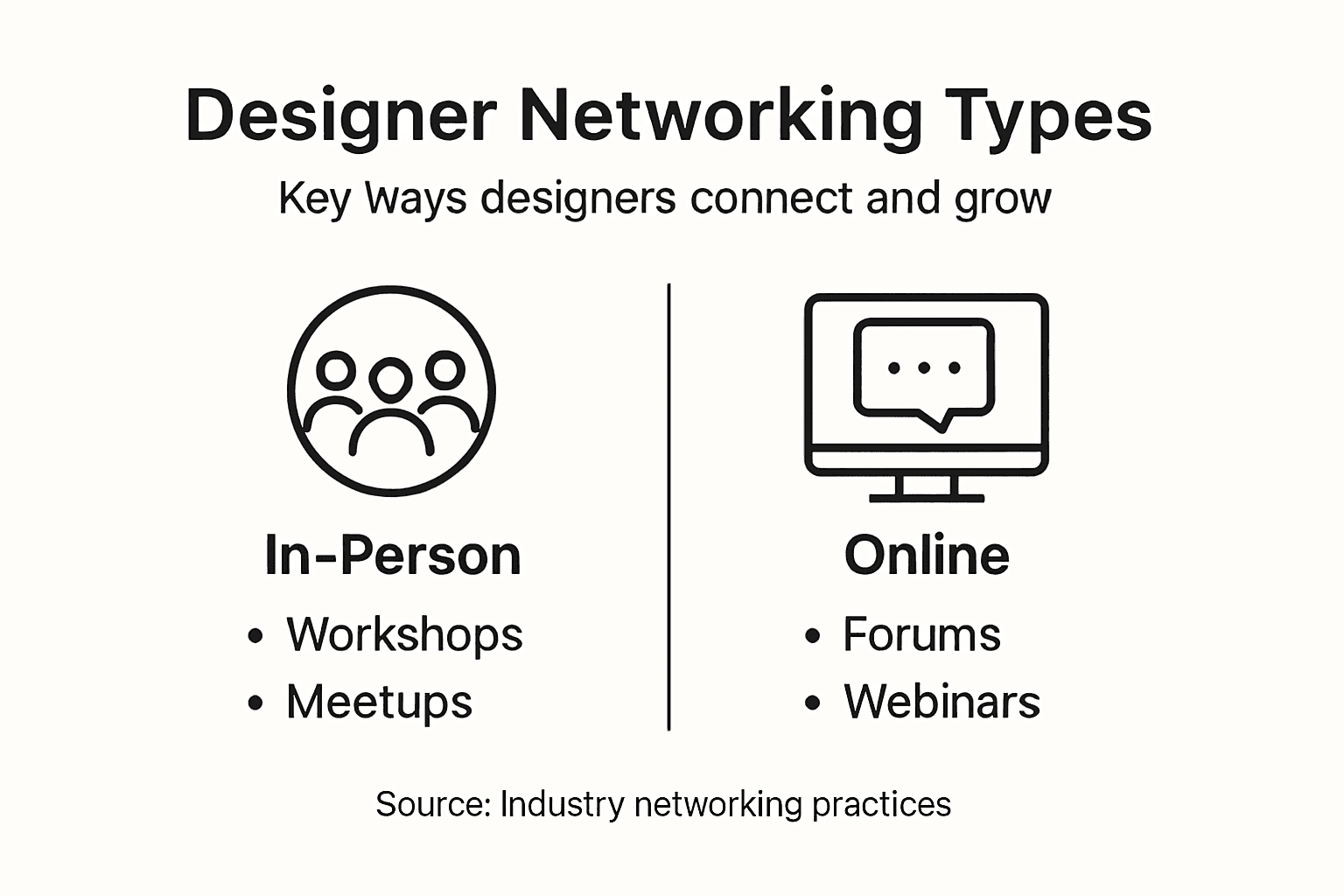
Design professionals have multiple avenues for expanding their professional networks, each offering unique advantages and opportunities for connection. Designer networking opportunities range from traditional in-person events to dynamic digital platforms, providing designers with diverse channels to build meaningful professional relationships.
Traditional networking environments remain crucial for designers seeking direct, personal interactions. These include:
- Design conferences and trade shows
- Local design meetups and workshops
- Professional association events
- Portfolio review sessions
- Industry award ceremonies and exhibitions
Professional networks and online communities have dramatically expanded opportunities for designers to connect globally. Digital platforms enable designers to transcend geographic limitations, engaging with peers, potential clients, and industry thought leaders through specialized forums, social media groups, and professional networking sites.
Each networking opportunity offers distinct benefits for career growth. In-person events provide immediate, tactile interactions and spontaneous connections, while online platforms facilitate ongoing discussions, resource sharing, and long-distance collaborations. The most successful designers strategically blend both digital and physical networking approaches to maximize their professional visibility and opportunities.

Here's a quick comparison of in-person and online networking for design professionals:
| Aspect | In-Person Networking | Online Networking |
|---|---|---|
| Accessibility | Limited by location | Global access, no travel required |
| Relationship Depth | Easier to build trust fast | May require longer to form rapport |
| Interaction Style | Immediate, face-to-face | Flexible, asynchronous communication |
| Follow-up Ease | Needs scheduled effort | Can maintain ongoing interactions |
Pro tip: Allocate consistent time each month to actively participate in at least two different networking platforms, balancing online engagement with real-world professional events.
How Networking Drives Career Growth
Networking is a powerful catalyst for professional advancement, particularly in design careers where relationships can unlock unexpected opportunities. Career growth through networking represents a strategic approach to building professional momentum that extends far beyond simple social interactions.
Successful designers leverage networking through multiple strategic channels:
- Access to unadvertised job opportunities
- Direct insights from industry leaders
- Potential mentorship connections
- Knowledge about emerging design trends
- Collaborative project introductions
- Skill enhancement through peer interactions
Professional networking strategies reveal that consistent engagement builds social capital essential for long-term career development. By actively participating in professional communities, designers create a robust support system that provides continuous learning opportunities, industry visibility, and potential career acceleration.
The transformative power of networking lies in its ability to create unexpected connections. What might begin as a casual conversation at a design conference could evolve into a significant career opportunity, collaborative project, or breakthrough professional relationship. Successful designers understand that networking is not about collecting contacts, but about cultivating meaningful, mutually beneficial professional relationships.
Pro tip: Develop a consistent networking approach by dedicating at least three hours monthly to intentional professional relationship building.
Below is a summary of key outcomes from effective networking in the design industry:
| Outcome | Description | Long-Term Value |
|---|---|---|
| Career Opportunities | Access to jobs and collaborations | Sustained career advancement |
| Industry Knowledge | Early awareness of trends and practices | Greater industry adaptability |
| Skill Enhancement | Learning from peers and mentors | Continuous professional growth |
| Client Relationship Building | Deeper partnerships and trust | Repeat business and referrals |
Collaboration, Mentorship, and Peer Support
The design industry thrives on interconnected relationships that go beyond traditional professional interactions. Collaborative ecosystems create powerful environments where designers can learn, grow, and evolve through meaningful exchanges of knowledge, skills, and perspectives.
Effective peer support and collaboration manifest through multiple channels:
- Skill exchange workshops
- Collaborative design projects
- Informal critique sessions
- Shared online design communities
- Cross-disciplinary team initiatives
- Mutual professional development groups
Mentorship represents a critical component of professional growth in design. Experienced professionals who guide emerging talents help bridge theoretical knowledge with practical industry insights. These relationships are not one-directional; they often become mutually beneficial partnerships where both mentor and mentee learn and challenge each other's perspectives.
Successful designers understand that professional relationships are living, dynamic networks. They invest time in cultivating genuine connections, recognizing that true collaboration transcends transactional interactions. By approaching peer relationships with curiosity, respect, and a genuine desire to contribute, designers create sustainable support systems that propel individual and collective creative achievements.
Pro tip: Actively seek mentorship opportunities by identifying three professionals in your design niche whose work and approach you genuinely admire and respect.
Building Client Relationships Through Networking
Client relationship networking transforms professional interactions from transactional exchanges to strategic partnerships. Strategic networking goes beyond simple contact management, creating pathways for designers to develop meaningful, long-term client connections that drive business growth and professional reputation.
Successful client relationship building involves multiple strategic approaches:
- Attending industry-specific conferences
- Engaging in targeted online communities
- Sharing valuable professional insights
- Demonstrating consistent expertise
- Providing exceptional communication
- Offering proactive problem-solving solutions
- Maintaining regular professional touchpoints
Networking portfolio development strategies highlight the importance of creating trust through consistent, genuine interactions. Designers who approach client relationships with authenticity, reliability, and a clear understanding of client needs can transform initial connections into long-term collaborative partnerships that extend far beyond single project engagements.
The most effective client relationships are built on a foundation of mutual respect, shared professional values, and a genuine commitment to delivering exceptional design solutions. By positioning oneself as a collaborative partner rather than a transactional service provider, designers can create a unique value proposition that distinguishes them in a competitive marketplace.
Pro tip: Create a personalized follow-up system that includes sending thoughtful, value-added communications to key client contacts at least quarterly.
Common Networking Pitfalls to Avoid
Networking mistakes can significantly undermine professional growth and opportunities for designers. Strategic networking requires avoiding common pitfalls that can derail potentially valuable professional connections and harm long-term career prospects.
Designers should be particularly cautious of these critical networking missteps:
- Failing to follow up after initial meetings
- Appearing overly self-promotional
- Neglecting to listen actively
- Approaching networking with a transactional mindset
- Inconsistent or unprofessional communication
- Avoiding genuine relationship building
- Displaying a lack of professional preparation
Successful networking strategies emphasize the importance of creating authentic, value-driven connections. Designers who approach networking as a collaborative opportunity rather than a competition are more likely to build meaningful, sustainable professional relationships that can provide long-term career benefits.
The most destructive networking behaviors stem from a fundamental misunderstanding of professional relationship building. Genuine networking is not about collecting business cards or making quick sales, but about creating mutual understanding, demonstrating professional value, and establishing trust through consistent, thoughtful interactions.
Pro tip: Before every networking event, set a personal goal to learn something meaningful about three different professionals, focusing on their experiences rather than promoting yourself.
Elevate Your Design Career Through Meaningful Networking
The challenge of building genuine professional relationships and navigating the design industry can feel overwhelming. If you are seeking to move beyond surface-level connections and want to cultivate trust, mentorship, and collaboration as highlighted in "Why Networking Matters for Designers Today," you are not alone. Many Irish creatives struggle to access tailored support that combines practical business guidance with authentic community connection.
At The Biscuit Factory, we understand that successful networking is a strategic investment in your career growth. Our platform offers live coaching, workshops, and expert-led masterclasses designed to help you develop critical skills like pricing, sales strategies, and business planning—all in a supportive environment without the distraction of algorithms. Join a community where peer support and ongoing educational content empower you to turn professional relationships into lasting partnerships.
Join The Biscuit Factory today and start building your creative business on a foundation of trusted connections and expert guidance.
Take control of your career growth by accessing tailored resources and dedicated planning sessions for 2026. Discover how networking combined with focused business development can transform your creative journey—visit The Biscuit Factory now and connect with fellow Irish creatives ready to support your professional success.
Frequently Asked Questions
What is networking in the design industry?
Networking in the design industry involves forming strategic professional relationships to enhance career opportunities, build trust, and foster collaboration among designers.
How can designers effectively network in their field?
Designers can network by attending industry conferences, participating in workshops, joining online communities, and engaging in local meetups to build meaningful connections.
What are the key benefits of networking for designers?
Networking offers designers access to unadvertised job opportunities, insights from industry leaders, mentorship connections, and collaborative projects, which can significantly enhance their professional growth.
What common mistakes should designers avoid when networking?
Designers should avoid being overly self-promotional, neglecting to follow up after meetings, failing to listen actively, and approaching networking with a transactional mindset to build authentic connections.