

For many Irish creative entrepreneurs and artists, building a profitable practice can feel isolating without reliable support and connection. Traditional business networks rarely meet the unique needs of freelancers and microbusinesses in the creative sector, where project-based work is common and community access is vital. By engaging with creative networks, professionals unlock new pathways for collaboration, shared resources, and business growth, offering practical solutions to common challenges faced in the Irish cultural industries.
Table of Contents
- Defining Creative Networks for Professionals
- Major Types of Creative Networks Today
- Core Benefits: Income, Collaboration, and Support
- Key Features: Business Tools and Resources
- Potential Challenges and How to Overcome Them
- Comparing Alternatives: Standalone vs. Networked Growth
Key Takeaways
| Point | Details |
|---|---|
| Creative Networks Facilitate Collaboration | These networks provide spaces for professionals to exchange ideas and opportunities beyond traditional industry boundaries. |
| Types of Creative Networks Offer Diverse Benefits | Sector-specific, geographic, and transnational networks cater to various needs, enabling access to resources and professional connections. |
| Key Benefits Include Income and Support | Joining creative networks enhances income opportunities through collaborative projects and offers structural support like mentorship and resource sharing. |
| Navigating Challenges Requires Adaptability | Professionals must develop effective communication strategies and flexibility to overcome potential barriers in interdisciplinary collaborations. |
Defining Creative Networks for Professionals
Creative networks represent dynamic collaborative ecosystems specifically designed to support professionals in cultural and creative industries. Organized entities dedicated to collaboration emerge as critical infrastructure for independent creators seeking sustainable professional growth. These networks function beyond traditional business structures, providing interconnected support systems for freelancers and microbusinesses.
Creative networks typically encompass several key characteristics that distinguish them from standard professional associations:
- Transdisciplinary collaboration frameworks
- Structured knowledge exchange platforms
- Innovation-focused community environments
- Project-based professional connection mechanisms
Interdisciplinary dialogue platforms enable creative professionals to transcend traditional industry boundaries. By creating intentional spaces for cross-pollination of ideas, these networks transform isolated creative practices into robust, interconnected professional ecosystems. Artists, designers, technologists, and researchers can discover unexpected synergies and collaborative opportunities.
Successful creative networks prioritize building sustainable infrastructures that address the unique challenges faced by independent creative professionals. They offer strategic support through mentorship, resource sharing, funding opportunities, and collective problem-solving mechanisms. Unlike traditional professional organizations, these networks emphasize flexibility, adaptability, and continuous learning.
Pro tip: Actively participate in at least two creative networks relevant to your professional domain to maximize exposure, learning opportunities, and potential collaborations.
Major Types of Creative Networks Today
Creative networks have evolved into sophisticated collaborative structures that address the complex needs of modern creative professionals. Collaboration models in creative industries reveal diverse approaches to professional interconnection, ranging from informal groups to highly structured organizational frameworks. Understanding these network types helps creative entrepreneurs strategically navigate their professional ecosystems.
The primary types of creative networks include:
- Sector-Specific Networks
- Performance arts collectives
- Design professional associations
- Technology innovation groups
- Geographic Networks
- Local creative district collaborations
- Regional cultural development groups
- Urban creative ecosystem platforms
- Transnational Creative Networks
- International artistic exchange programs
- Cross-cultural research collaboration platforms
- Global creative professional communities
Transnational networks in cultural sectors demonstrate remarkable complexity, operating across multiple governance levels. These hybrid models integrate grassroots initiatives with institutional support, creating dynamic environments that transcend traditional professional boundaries. By connecting cultural professionals across geographic and disciplinary lines, these networks generate unprecedented opportunities for innovation and collaborative research.
Each network type offers unique advantages, enabling creative professionals to access resources, share knowledge, and develop collaborative projects. The most effective networks combine structured support with flexible, organic interaction models that respect individual creativity while fostering collective growth.
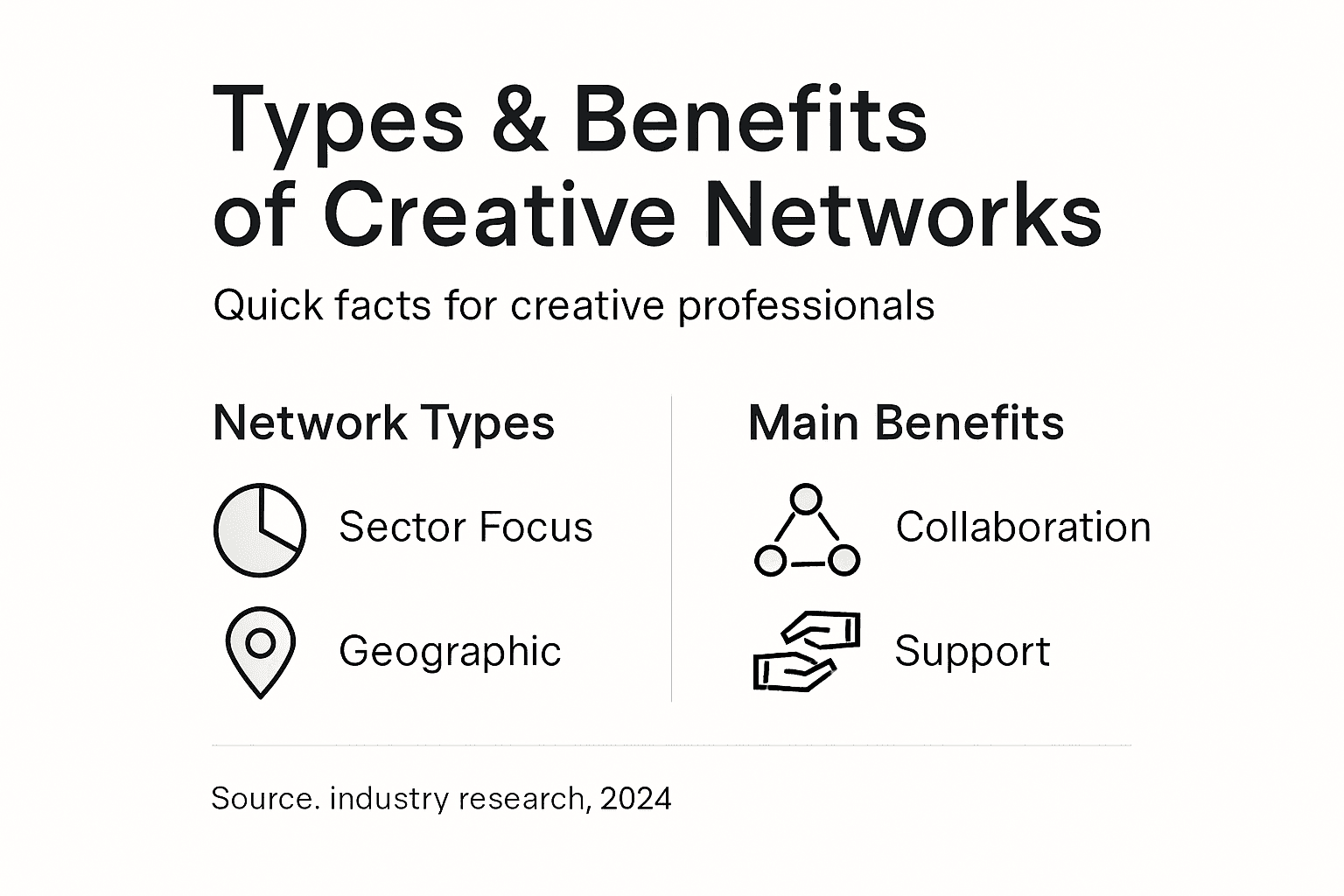
Here's a summary of how key creative network types differ in their focus and reach:
| Network Type | Primary Focus | Typical Reach | Example Members |
|---|---|---|---|
| Sector-Specific | Industry knowledge and trends | Single discipline | Artists, designers |
| Geographic | Local collaboration and support | Regional or citywide | Community organizers |
| Transnational | Global project interconnection | Multinational | Researchers, technologists |
This table provides a clear overview of the main creative network types and their distinguishing features for professionals.
Pro tip: Evaluate potential creative networks by assessing their collaboration intensity, resource accessibility, and alignment with your specific professional development goals.
Core Benefits: Income, Collaboration, and Support
Creative networks offer transformative opportunities for professionals seeking meaningful career advancement and sustainable income strategies. Professional collaboration networks generate unprecedented potential for individual growth by interconnecting skills, resources, and innovative opportunities across diverse creative domains.
The core benefits of joining creative networks can be categorized into three critical dimensions:
- Income Enhancement
- Access to collaborative project opportunities
- Expanded client referral networks
- Potential for higher-value contract negotiations
- Professional Collaboration
- Cross-disciplinary skill exchange
- Joint project development capabilities
- Shared creative problem-solving approaches
- Structural Support
- Mentorship from experienced professionals
- Resource and knowledge sharing platforms
- Collective advocacy for creative sector interests
Collaboration strategies in creative industries demonstrate that interconnected professionals can develop complex creative products impossible to achieve independently. These networks function as dynamic ecosystems where individual talents combine to generate collective value, transforming isolated creative practices into robust, mutually supportive professional environments.
The most successful creative professionals understand that collaboration is not just about networking, but about creating synergistic relationships that amplify individual capabilities. By strategically engaging with creative networks, professionals can transcend traditional career limitations, accessing opportunities that emerge through collective intelligence and shared resources.

Pro tip: Prioritize creative networks that offer tangible skill development opportunities and demonstrate a track record of meaningful professional collaborations.
Key Features: Business Tools and Resources
Creative networks provide comprehensive business infrastructure designed to address the unique challenges faced by independent professionals. Business support platforms offer targeted resources that transform individual creative practices into sustainable, strategic professional endeavors.
Key business tools and resources typically include:
- Financial Management
- Expense tracking templates
- Income projection worksheets
- Invoicing and contract management systems
- Professional Development
- Skill assessment diagnostics
- Personalized growth planning tools
- Online learning modules
- Networking Capabilities
- Client connection platforms
- Referral tracking systems
- Collaboration opportunity databases
Transnational creative network infrastructures demonstrate sophisticated approaches to resource mobilization. These platforms balance bottom-up creativity with strategic institutional support, creating dynamic environments where professionals can access funding, develop skills, and expand their professional networks strategically.
Successful creative networks distinguish themselves by offering adaptive tools that respond to evolving industry landscapes. By providing comprehensive resources that address financial, professional, and collaborative needs, these networks empower creative professionals to navigate complex career challenges with confidence and strategic insight.
Pro tip: Regularly audit the business tools and resources available in your creative network to maximize your professional development opportunities.
Potential Challenges and How to Overcome Them
Creative networks, while transformative, present complex navigation challenges for professionals seeking meaningful collaboration. Creative practice research challenges underscore the inherent complexity of interdisciplinary engagement and communication across diverse professional landscapes.
Key potential challenges in creative networks include:
- Communication Barriers
- Disciplinary language differences
- Varied professional expectations
- Inconsistent collaboration styles
- Structural Limitations
- Uneven network participation
- Resource allocation disparities
- Unclear collaboration protocols
- Professional Integration
- Skill compatibility issues
- Trust-building difficulties
- Intellectual property concerns
Collaboration management strategies highlight the importance of adaptive frameworks in addressing network complexity. Successful navigation requires developing flexible communication strategies, establishing clear expectations, and creating robust mechanisms for cross-sectoral understanding.
Effective creative professionals approach network challenges as opportunities for growth, viewing potential friction points as chances to develop more nuanced collaborative skills. By maintaining professional curiosity, practicing active listening, and remaining open to diverse perspectives, individuals can transform potential obstacles into meaningful professional development experiences.
Pro tip: Develop a personal communication adaptation strategy that allows you to quickly understand and align with different professional communication styles.
Comparing Alternatives: Standalone vs. Networked Growth
Creative professionals face a critical decision between pursuing independent growth or embracing collaborative network strategies. Comparative growth strategies reveal substantial differences in opportunity generation and professional development potential between standalone and networked approaches.
Key comparative dimensions include:
- Standalone Growth Characteristics
- Complete creative autonomy
- Direct control over projects
- Limited external resource access
- Slower skill development
- Networked Growth Advantages
- Diverse skill cross-pollination
- Expanded professional connections
- Accelerated learning opportunities
- Shared resource ecosystems
- Strategic Considerations
- Innovation potential
- Scalability of projects
- Professional network depth
- Collaborative efficiency
Ecosystem development strategies demonstrate that networked growth offers exponentially more sustainable outcomes compared to isolated professional practices. By connecting diverse actors across disciplines, creative professionals can access complex collaborative tools and mutual support mechanisms that dramatically enhance innovation potential.
The most successful creative professionals recognize that networked growth is not about surrendering individual creativity, but amplifying it through strategic collaboration. While standalone growth offers personal control, networked approaches provide dynamic environments where individual talents can be exponentially magnified through collective intelligence and shared resources.
Compare standalone and networked professional growth strategies below:
| Growth Approach | Control Level | Resource Access | Innovation Potential |
|---|---|---|---|
| Standalone | Full project control | Limited to own contacts | Incremental, slower |
| Networked | Shared decision making | Broad, collective resources | Exponential, diverse |
This table illustrates how networked growth strategies offer broader opportunities compared to standalone efforts.
Pro tip: Gradually transition from standalone to networked growth by selectively engaging in collaborative projects that align with your specific professional objectives.
Unlock Your Creative Potential with The Biscuit Factory
Navigating the challenges of creative networks can leave many artists and makers feeling isolated or overwhelmed by communication barriers and unclear collaboration paths. If your goal is to enhance your income, grow your professional connections, and build a sustainable creative business, practical support tailored to your unique needs is essential. The Biscuit Factory offers exactly that by providing a vibrant Irish community focused on business tools, live coaching, and structured planning to empower creative entrepreneurs to thrive.
Join The Biscuit Factory today to access live workshops, personalized growth planning sessions for 2026, and a supportive environment free from distracting algorithms. Discover how to overcome common creative network hurdles like collaboration complexity and resource sharing while boosting your confidence and income. Take action now to connect with peers and expert guidance designed specifically for Ireland's creative sector at The Biscuit Factory. Explore how joining this community can transform your creative career with impactful income enhancement and collaborative opportunities.
Frequently Asked Questions
What are the main benefits of joining a creative network?
Joining a creative network enhances income through collaborative project opportunities, fosters professional collaboration across disciplines, and provides structural support through mentorship and resource sharing.
How do creative networks support independent professionals?
Creative networks support independent professionals by offering access to strategic resources, facilitating cross-disciplinary collaboration, and helping to build sustainable infrastructures for long-term professional growth.
What types of creative networks exist today?
Creative networks primarily include sector-specific networks focusing on particular industries, geographic networks for regional collaboration, and transnational networks that connect professionals across borders for broader opportunities.
How can creative networks contribute to my professional development?
Creative networks can significantly contribute to professional development by providing diverse learning opportunities, enhancing skill sets through collaboration, and expanding networks to include influencers and leaders in various creative fields.