
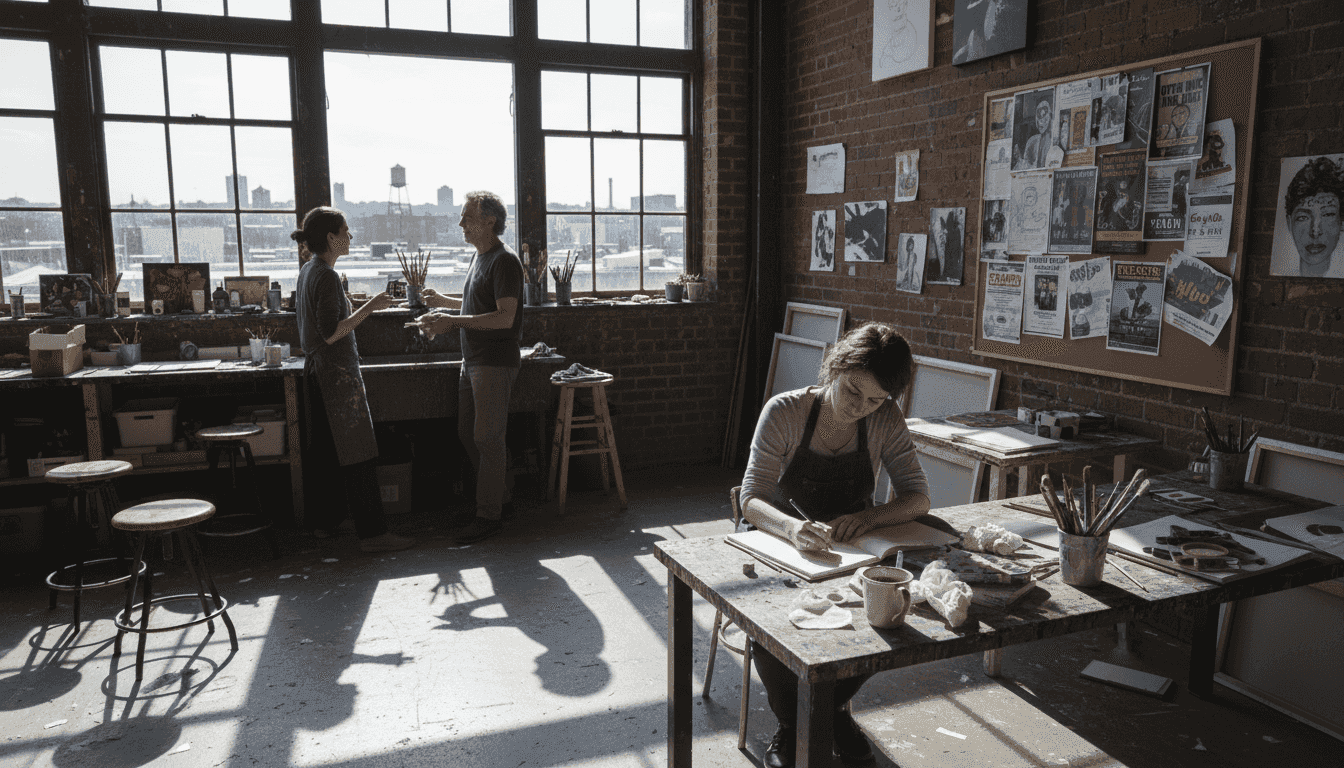
Building a sustainable career as an Irish artist often means facing isolation, creative uncertainty, and the challenge of consistent income head on. Artist communities offer more than companionship—they deliver vital emotional support, fresh business insight, and real feedback on your work from peers who share the unique pressures of the Irish creative sector. Discover how joining the right artist community connects you with genuine collaborators, strengthens your professional skills, and transforms the way you approach your art and business success.
Table of Contents
- What Artist Communities Mean For Creatives
- Key Types And Features Of Artist Groups
- Collaborative Opportunities And Peer Support Benefits
- Business Growth, Income, And Professional Skills
- Common Challenges And How To Overcome Them
Key Takeaways
| Point | Details |
|---|---|
| Community Support | Joining artist communities provides essential feedback and emotional support that enhances confidence and combats isolation. |
| Business Skills Development | Communities teach vital business skills, such as pricing and marketing, crucial for financial stability and professional growth. |
| Collaboration Opportunities | Collaborating within a community multiplies creative potential and leads to shared resources, enhancing market reach. |
| Networking and Visibility | Artist communities expand your professional network, creating opportunities for exposure and collaboration that can significantly boost income. |
What Artist Communities Mean For Creatives
Artist communities aren't just social clubs where creatives gather. They're practical, life-changing networks that directly impact your income, visibility, and creative confidence.
When you join a community, you gain access to real feedback on your work from people who understand your challenges. This isn't generic advice from the internet—it's honest critiques from other Irish artists who've faced similar obstacles.
Beyond feedback, communities provide emotional support that independent artists desperately need. Working alone in your studio can be isolating, especially when sales are slow or creative blocks hit. A supportive community reminds you that struggling isn't personal failure; it's part of the journey.
Artist communities also expand your professional network exponentially. You meet collaborators, potential customers, gallery owners, and other creatives who can refer work your way. These connections often lead to unexpected opportunities: joint projects, commission referrals, or partnerships that boost your income.
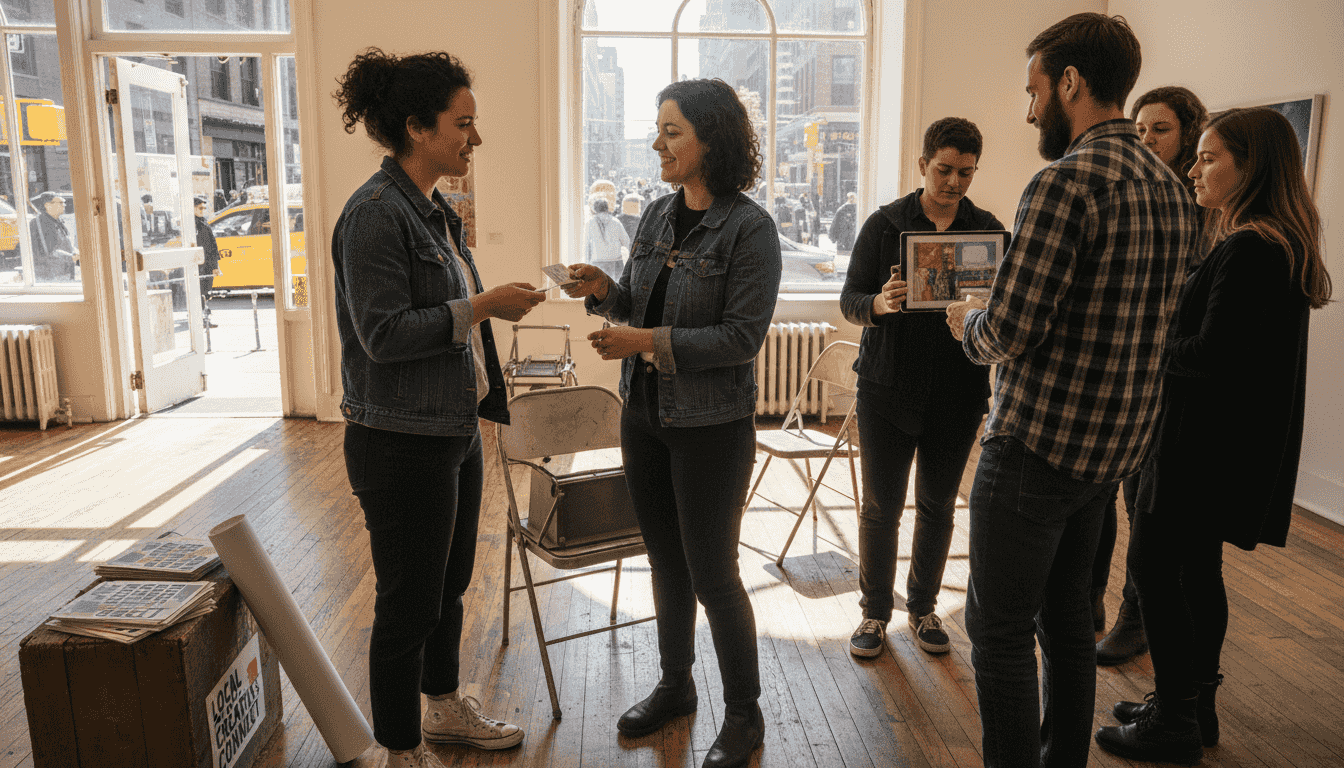
Socially engaged artist practices within communities help your work reach diverse audiences—from public spaces to educational settings. This exposure positions your art differently in the marketplace.
Here's what artist communities deliver:
- Access to business knowledge (pricing, marketing, sales strategies) shared by experienced creatives
- Real accountability to help you actually finish projects and launch offerings
- Connections to resources, vendors, and professionals who support creative businesses
- A safe space to test ideas before investing money in them
- Regular exposure to fresh perspectives and creative inspiration from peers
The Biscuit Factory membership gives you this exact environment. Members gain live coaching on pricing challenges, workshop access covering everything from social media to business planning, and planning sessions dedicated to mapping your growth for 2026.
You're not paying for templates or generic advice. You're investing in a community that understands the Irish creative sector specifically—the challenges, the market gaps, the pricing pressures unique to working here.
Without community support, you make decisions in isolation. With it, you benefit from collective knowledge, faster learning, and peers who celebrate your wins. That difference directly impacts your bottom line.
Pro tip: When evaluating any artist community, ask current members directly: "What specific business problem did this community help you solve in the last 3 months?" Their answers reveal whether the community delivers real value beyond networking.
Key Types And Features Of Artist Groups
Not all artist communities work the same way. Different structures serve different needs, and choosing the right fit depends on your goals and working style.
Artist residencies, collectives, and networks represent the main categories you'll encounter. Each offers distinct advantages for your creative and business development.
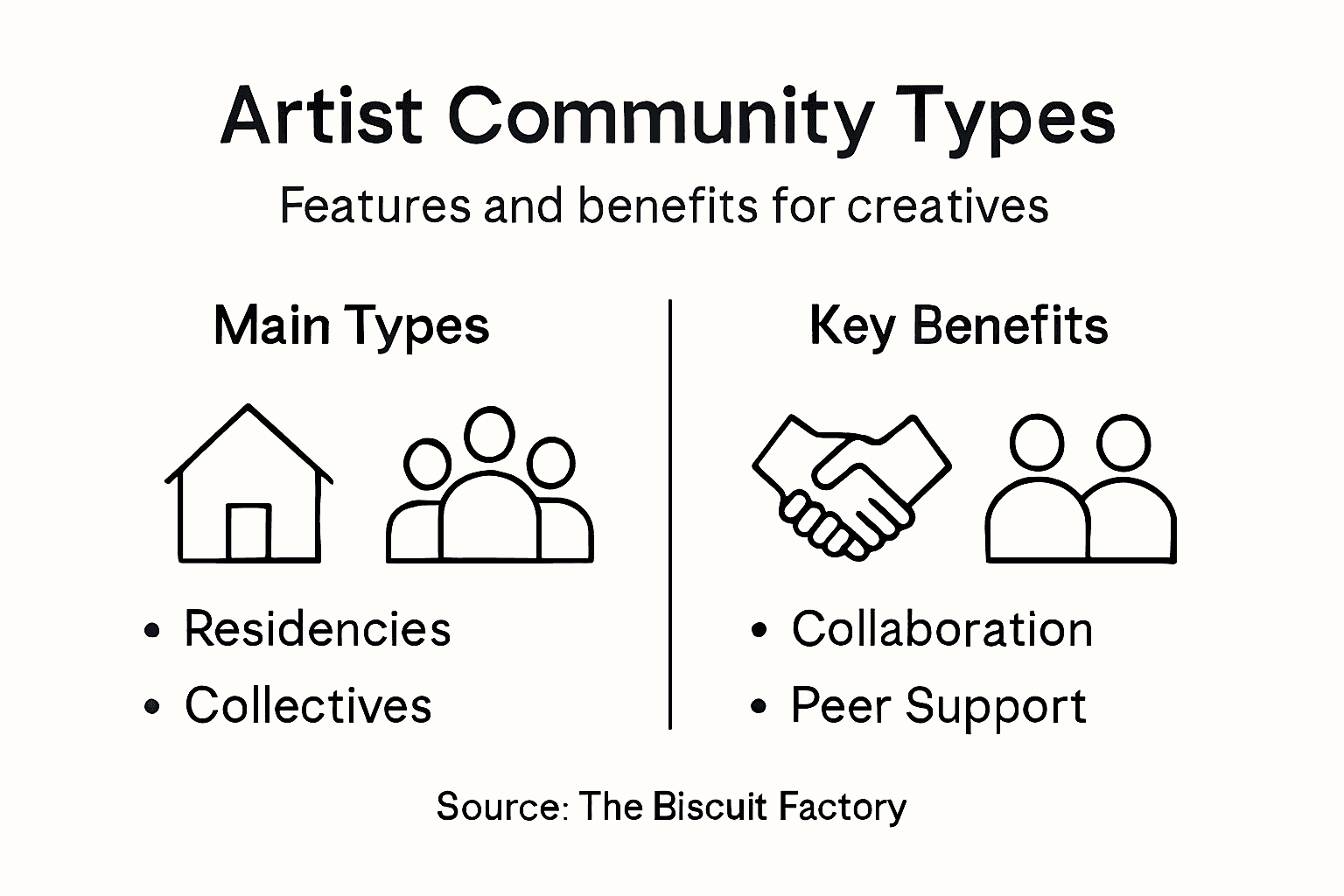
Residencies provide immersive creative environments where you focus entirely on your work for a set period. You're removed from daily distractions, gaining dedicated time for deep creation and skill development. Many residencies offer career mentoring, exhibition opportunities, and networking with established artists.
Collectives emphasize shared values and collaborative decision-making. Members work together on projects, share studio space, or pool resources to reduce individual costs. This structure works well if you enjoy collaboration and want to split administrative responsibilities.
Networks connect creatives without requiring shared physical space or daily collaboration. They're looser, more flexible arrangements ideal if you prefer independence while accessing support, resources, and referral opportunities.
Beyond structure, successful artist groups share common features:
Here's a comparison of main artist community types and the members best suited to each:
| Type of Artist Community | Core Benefit | Ideal for | Business Focus |
|---|---|---|---|
| Residency | Skill building, immersion | Early-career artists | Portfolio growth, mentoring |
| Collective | Shared resources, collaboration | Creatives seeking teamwork | Cost saving, joint visibility |
| Network | Flexible connections, referrals | Independent professionals | Business scaling, new markets |
| Hybrid (e.g., Biscuit Factory) | Coaching, accountability, income strategy | Artists wanting support and autonomy | Pricing, sales, growth planning |
- Social engagement focus: Many communities emphasize public interventions and collaborations that create social impact alongside artistic output
- Creative autonomy: You maintain control over your artistic direction while accessing collective support
- Professional development: Coaching, workshops, and mentoring help stabilize your artistic career
- Resource sharing: Access to equipment, studio space, or vendor connections reduces individual costs
- Public visibility: Collaborative projects and group exhibitions increase exposure for all members
Different artist communities serve different career stages. Early-stage artists often thrive in structured residencies, while established creators benefit more from flexible networks that respect their independence.
The Biscuit Factory operates as a hybrid network-collective model. You maintain complete creative independence while accessing live coaching, templates, and troubleshooting support from experienced business mentors. Members also connect with peers facing similar challenges, creating that invaluable accountability and feedback loop.
The key difference: The Biscuit Factory focuses specifically on the business side of being a creative professional. You get guidance on pricing, sales strategies, and sustainable income—not just artistic development.
Pro tip: Before joining any artist community, clarify what you need right now: creative feedback, business guidance, accountability, or networking. Match that need to the group's actual strengths rather than assuming all communities offer everything.
Collaborative Opportunities And Peer Support Benefits
One of the most underrated advantages of artist communities is the chance to collaborate on projects you couldn't execute alone. These partnerships multiply your creative capacity and market reach significantly.
Transdisciplinary collaboration and peer interactions within creative networks strengthen artistic growth and innovation. When you work with other creatives, you gain access to different skills, perspectives, and problem-solving approaches that enhance your work quality.
Collaboration creates tangible business benefits, not just creative ones. Joint projects mean shared marketing costs, combined audiences, and split workload during execution. A mural project with two painters costs each of you 50 percent of the labor but reaches both of your client networks.
Peer support operates differently than collaboration. It's the ongoing feedback, encouragement, and honest critique from people who understand your specific challenges. This support prevents the isolation that kills many creative businesses.
When peers see you struggling with pricing, they share what worked for them. When you're questioning your market fit, they offer perspective from their own journey. This kind of support accelerates your learning curve by years.
Here's what peer support and collaboration actually deliver:
- Shared resources: Access to equipment, studio space, or vendor relationships reduces your individual costs
- Joint marketing: Pool budgets for exhibitions, social media campaigns, or public projects
- Skill exchange: Learn techniques, business strategies, and creative approaches from peers directly
- Accountability partnerships: Regular check-ins keep you moving toward your goals
- Emotional resilience: Knowing others struggle too makes rejection and slow periods feel less personal
- Project opportunities: Collaborators refer clients and projects to each other naturally
Community art collaborations reinforce bonds and enhance well-being while creating shared ownership of the creative process. This transforms individual artists into connected professionals with mutual investment in each other's success.
Within The Biscuit Factory, peer support comes through structured accountability groups, Q&A sessions where you troubleshoot real problems together, and natural connections that form around shared challenges like pricing or finding exhibition space.
The collaborative opportunities differ from traditional gallery networks. Members work together on business problems: launching a new product line, restructuring pricing, or breaking into a new market segment. These collaborations directly impact your revenue.
Pro tip: Start small with peer support by identifying one challenge you face right now and asking two community members how they solved it. Their specific solutions are worth more than any generic advice you'll find online.
Business Growth, Income, And Professional Skills
Here's the uncomfortable truth: a fine arts degree doesn't guarantee income stability. Many Irish artists earn less than peers in other professions, regardless of their education or talent level.
The difference between struggling artists and thriving ones isn't creativity—it's business skills. Entrepreneurial skills development alongside artistic identity directly improves income adequacy and career sustainability. Without these skills, even exceptional talent doesn't translate into financial security.
Artist communities exist partly to close this gap. They teach you the business side: pricing strategies, customer acquisition, financial management, and scaling your work. These aren't creative skills. They're professional competencies that separate profitable artists from broke ones.
Income diversification becomes possible through community connections. You learn which revenue streams work (commissions, teaching, product sales, licensing), test new offerings with peer feedback, and scale what actually generates money.
Professional skills development happens through multiple channels in strong communities:
- Live coaching: Real-time guidance on your specific pricing, sales, or business challenges
- Peer mentoring: Learning from artists slightly ahead of you who've solved problems you face now
- Structured templates: Access to proven systems for invoicing, contracts, and financial tracking
- Workshops and masterclasses: Targeted skill-building on marketing, social media, or product development
- Accountability groups: Regular check-ins that keep you implementing what you learn
Structured engagement with organizations provides networks, skill-building opportunities, and income diversification. Communities that emphasize professional development help you balance artistic practice with economic demands, creating sustainable careers.
The Biscuit Factory approach differs from traditional art education. You're not learning art history or studio technique. You're learning how to price your work so you can eat, how to market to customers who actually buy, and how to plan growth that increases your income year over year.
Artists who develop strong business skills alongside their craft earn 40-60% more over five years than equally talented peers without those skills.
Members access planning sessions specifically designed for mapping 2026 growth, troubleshooting templates for common problems, and direct expert guidance when you're stuck on pricing or sales strategy decisions.
Pro tip: Pick one business skill that directly impacts your income right now—pricing, marketing, or financial tracking. Master that skill through community resources before moving to the next one.
Common Challenges And How To Overcome Them
Artists face real, structural challenges that aren't solved by talent alone. Financial instability, gender pay gaps, and lack of stable employment plague the creative sector globally, including Ireland. Understanding these challenges and how communities help you navigate them is critical.
Many Irish artists juggle multiple jobs just to sustain creative practice. Teaching part-time, taking freelance graphic design work, working retail—all while trying to build a sustainable art business. This juggling act burns you out and divides your energy.
Communities address this by helping you accelerate income growth so you don't need side jobs. When you learn to price correctly and scale your art business, one revenue stream becomes sufficient. That changes everything about your energy and focus.
Mental health struggles are real in the creative sector. Isolation, financial stress, rejection, and imposter syndrome create a toxic emotional environment. Community combats this directly through peer support and shared struggle.
Imposter syndrome hits especially hard when you're alone. A peer who's already sold 500 units of the same product type reminds you that doubt is normal, not a sign you don't belong. That conversation is worth more than therapy.
Common artist challenges and community solutions:
Below is a summary of common artist challenges with examples of how communities address them:
| Challenge | Typical Impact | Community Solution |
|---|---|---|
| Financial precarity | Inconsistent cash flow | Peer pricing advice, shared gigs |
| Isolation | Creative burnout risk | Regular check-ins, events |
| Imposter syndrome | Doubt, stalled progress | Success stories from peers |
| Marketing overwhelm | Slow sales, confusion | Templates, group campaigns |
| Structural barriers | Blocked opportunities | Collective advocacy efforts |
- Financial precarity: Community guidance on pricing, pricing strategy, and diversifying income streams
- Isolation and burnout: Regular peer connection, accountability groups, and social events
- Imposter syndrome: Hearing from successful peers that they struggled too
- Pricing uncertainty: Live coaching on value-based pricing specific to your work
- Marketing overwhelm: Templates, strategies, and peer examples to follow
- Structural barriers: Collective voice and advocacy alongside individual skill-building
Comprehensive support including social protections, fair remuneration, and legal guidance strengthens artists' capacity to overcome systemic challenges. Community networks amplify individual voices and create collective leverage.
The Biscuit Factory tackles these head-on through troubleshooting sessions where you bring real problems ("I don't know how to price my services") and leave with concrete solutions. You're not alone in these challenges—dozens of other Irish creatives face them too.
You cannot solve systemic challenges alone. Community transforms individual struggles into shared knowledge and collective problem-solving power.
When you see other artists succeed using strategies you learn, your confidence grows. When peers celebrate your wins, burnout becomes manageable. When someone shares exactly how they raised their prices without losing clients, you have a roadmap.
Pro tip: When facing a business challenge, ask your community first. Odds are 70 percent someone's solved it already and can give you their specific solution rather than generic internet advice.
Unlock Your Creative Business Potential with The Biscuit Factory
The challenges of financial uncertainty, imposter syndrome, and navigating pricing strategies discussed in "Why Join Artist Communities: Impact on Success" are exactly what The Biscuit Factory was created to solve. If you feel isolated or overwhelmed by managing your art business alone, you are not alone. This unique community provides live coaching, peer accountability, and targeted business planning to help Irish artists, makers, and creative entrepreneurs break through these common barriers and build sustainable income.
Join The Biscuit Factory today and experience the power of practical, expert-led support tailored specifically to your creative journey in Ireland. Benefit from workshops, troubleshooting sessions, and growth planning designed to increase your confidence and earnings in 2026. Don’t wait to transform your art career – connect with peers who understand your challenges and start making real progress now by visiting our membership platform and exploring how we can support your business growth.
Frequently Asked Questions
What are the benefits of joining an artist community?
Joining an artist community provides access to real feedback on your work, emotional support, a professional network, business knowledge, accountability, and exposure to fresh perspectives.
How can collaboration within artist communities enhance my work?
Collaboration allows you to combine skills and resources with other creatives, leading to shared marketing costs, expanded audiences, and enhanced project quality, ultimately boosting your visibility and income potential.
What types of artist communities are available?
Artist communities vary in structure, including residencies, collectives, networks, and hybrid models. Each type offers unique advantages tailored to different goals, such as skill development, collaboration, or independent support.
How do artist communities help with business skills?
Artist communities focus on teaching essential business skills like pricing strategies, customer acquisition, and financial management, which are crucial for artists to achieve income stability and professional success.
Recommended
- The Biscuit Factory | Ireland's Independent Creative Community | The Biscuit Factory
- The Biscuit Factory - Ireland's Independent Creative Community | Irish Artists & Makers
- The Biscuit Factory - Ireland's Independent Creative Community | Irish Artists & Makers
- Why Discover Your Purpose: Unlocking Fulfillment