
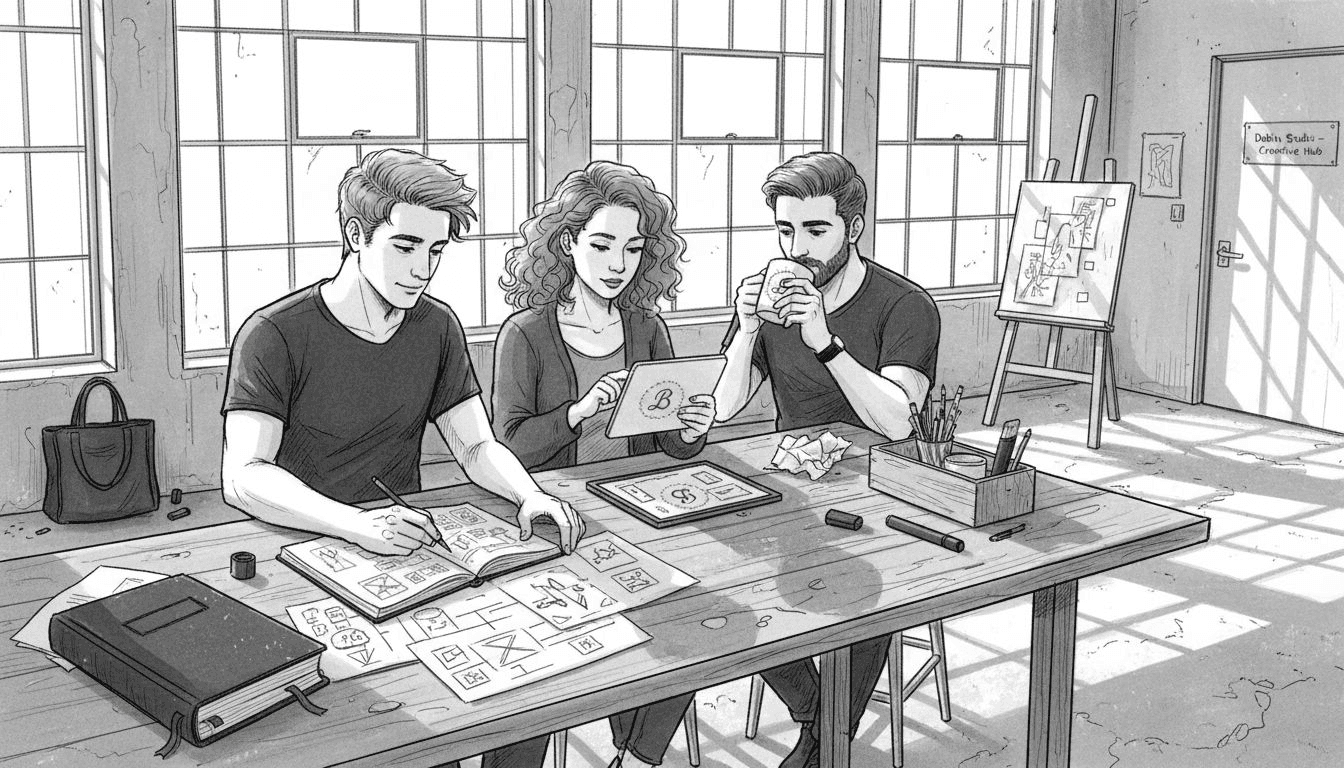
Choosing the right business model shapes your creative venture's profitability and growth trajectory. Irish artists, makers, and designers face unique challenges in matching their skills to sustainable business structures. This guide examines four primary creative business types, explores selection criteria, and provides practical recommendations to help you build a profitable, scalable creative enterprise in Ireland's evolving market landscape.
Key takeaways
| Point | Details |
|---|---|
| Four main types | Creative businesses classify into product-based, service-based, digital, and hybrid models, each with distinct capital and scalability traits. |
| Selection criteria | Evaluate business models using capital requirements, scalability potential, skill alignment, market access, and operational complexity. |
| Irish market context | Consider Ireland's creative sector dynamics, digital infrastructure, and local market size when choosing your business type. |
| Hybrid opportunities | Combining products and services diversifies income but increases management complexity, best suited for experienced creatives. |
| Strategic flexibility | Successful creatives adjust business models over time as skills develop and market conditions change. |
Selection criteria for choosing a creative business model
Before diving into specific business types, you need a framework to evaluate which model aligns with your circumstances. Five critical criteria determine whether a business type suits your creative practice.
Capital investment ranks first because it determines your entry barrier. Product-based businesses typically require significant upfront spending on materials, inventory, and equipment. Service-based models need minimal capital beyond professional tools and marketing. Digital businesses fall somewhere between, often requiring technology investments but no physical inventory. Assess your available funds and risk tolerance before committing to a model.
Scalability potential measures how easily you can grow revenue without proportionally increasing time or costs. A pottery maker faces physical production limits, whilst a digital template creator can sell unlimited copies. Understanding scalability helps you project long-term growth and income ceilings for each business type.
Skill alignment ensures your business model leverages your strongest creative and commercial abilities. Match your technical craft skills, people skills, and digital capabilities to business types that reward those strengths. A graphic designer with strong client relationship skills might thrive in service-based consulting, whilst a ceramicist with production efficiency excels in product-based wholesale.
Market access evaluates how easily you can reach and serve your target customers. Service businesses often rely on local or national markets, whilst digital models access global audiences. Ireland's relatively small domestic market makes this criterion particularly important for creatives seeking significant scale.
Operational complexity encompasses the day-to-day management demands of each model. Product businesses juggle inventory, fulfilment, and supply chains. Service models require constant client acquisition and project management. Digital businesses face platform management and content creation cycles. Hybrid models compound these challenges.
Pro tip: Map your current capacity for complexity honestly before choosing a model. Starting with a simpler structure and evolving toward complexity as you gain experience often yields better results than launching with an overly ambitious hybrid model.
Product-based creative businesses: makers and artisans
Product-based creative businesses centre on designing, producing, and selling physical goods. Irish makers, artisans, jewellery designers, textile creators, and ceramicists exemplify this model. You create tangible items that customers purchase and own.
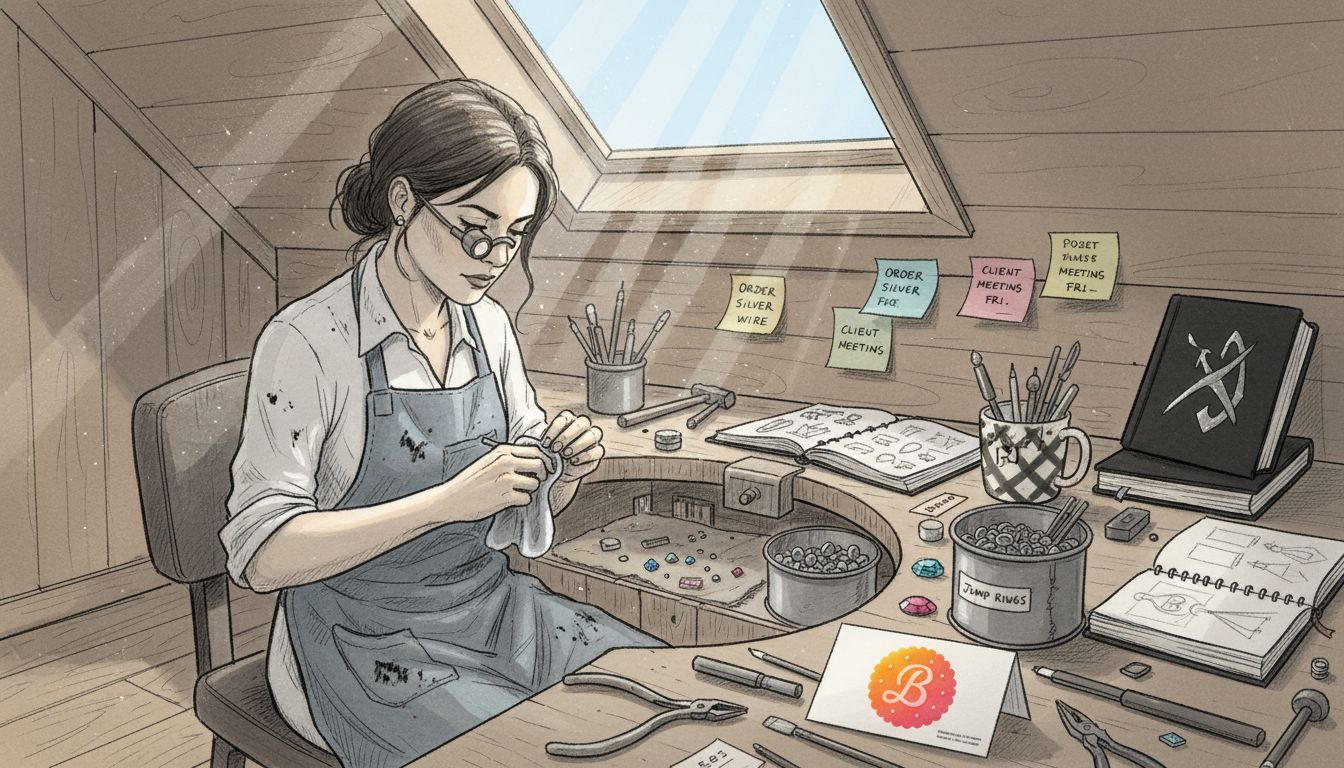
These businesses require moderate to high capital investment for materials, tools, workspace, and initial inventory. A jewellery maker might invest €3,000-€10,000 in tools, metals, and gemstones before generating revenue. Production capacity limits scalability unless you invest in equipment, hire staff, or partner with manufacturers.
Successful product businesses typically pursue multiple sales channels. Craft markets and local shops provide early revenue and customer feedback. Online platforms like Etsy expand reach beyond Ireland's borders. Wholesale partnerships with retailers offer volume sales but require consistent production capacity and lower per-unit margins. Ireland's creative community hub connects makers with wholesale opportunities and peer support.
Strengths of product-based models include:
- Tangible value proposition that customers can see, touch, and evaluate
- Established sales channels through markets, shops, and online platforms
- Brand building through distinctive physical products and packaging
- Potential for wholesale partnerships that scale revenue
- Product photography creates engaging marketing content
Challenges you'll face include inventory management, storage costs, production time constraints, shipping logistics, and maintaining quality at scale. Cash flow cycles can strain finances when you invest in materials months before receiving payment.
This model suits creatives who enjoy hands-on making, have space for production and storage, and possess skills in a physical craft. You need patience for production work and willingness to manage supply chains and fulfilment processes.
Pro tip: Start building wholesale relationships early, even before you feel ready. Attending trade shows and connecting with shop buyers creates opportunities that take months to materialise, so planting seeds now pays dividends later.
Service-based creative businesses: freelancers, consultants, and coaches
Service-based creative businesses sell expertise, time, and specialised skills rather than physical products. Graphic designers, photographers, copywriters, brand consultants, and creative coaches operate in this space. You deliver value through professional services tailored to client needs.
Capital requirements remain refreshingly low compared to product businesses. A graphic designer needs design software, a reliable computer, and portfolio website. Total startup costs might reach €2,000-€5,000, making this model accessible for creatives with limited funds. No inventory, no storage, no shipping logistics.
Revenue depends entirely on your ability to attract and retain clients. Strong personal branding becomes essential. You market yourself as much as your services. Client acquisition through networking, referrals, and digital marketing determines your income stability. Feast-or-famine cycles challenge many freelancers who struggle with inconsistent project flow.
Pricing services appropriately makes or breaks profitability. Undercharging plagues Irish creatives who undervalue their expertise. A pricing and profit calculator for creatives helps establish sustainable rates that cover your costs and desired income. Business legal services assist with contracts that protect your interests.
Key advantages include:
- Minimal capital investment and overhead costs
- Location flexibility with remote service delivery
- Higher profit margins without material or inventory costs
- Direct client relationships that build referral networks
- Ability to adjust pricing as reputation grows
- Scalability through premium positioning and selective client rosters
Challenges centre on constant marketing demands, income unpredictability, client dependency, and time-for-money constraints. You can't easily scale beyond your available hours without hiring staff or raising rates significantly. Burnout risks run high when you chase every opportunity.
This model works best for creatives with strong communication skills, confidence in client-facing situations, and discipline for self-directed work. Marketing and business development must genuinely interest you, or you'll struggle to maintain a steady client pipeline.
Digital and online creative businesses: content creators and marketplaces
Digital creative businesses produce and sell intangible products or services delivered electronically. Digital artists, online course creators, template designers, print-on-demand shops, and content creators populate this rapidly growing category. Products range from downloadable art prints and design templates to video courses and digital subscriptions.
Startup capital varies based on your chosen platform and product type. A template designer might launch with €500 for software and hosting. A course creator could invest €3,000-€8,000 in recording equipment, editing software, and platform fees. Product creation requires significant time investment even when monetary costs stay low.
Scalability represents the primary advantage. Once you create a digital product, reproduction costs essentially nothing. You can sell one copy or one thousand with minimal additional expense. This characteristic enables rapid revenue growth for successful digital products.
Competition intensity and discoverability pose major challenges. Global market access cuts both ways. You compete with creators worldwide, making differentiation critical. Platform algorithms, search engine optimisation, and social media marketing determine whether potential customers discover your offerings. Marketing sophistication separates successful digital businesses from struggling ones.
| Business type | Growth potential | Capital needs | Marketing complexity |
|---|---|---|---|
| Digital products | Very high | Low to moderate | High |
| Online courses | High | Moderate | Very high |
| Content subscriptions | Very high | Low | High |
| Print-on-demand | Moderate | Very low | Moderate |
Digital businesses suit tech-savvy creatives comfortable with online platforms, digital marketing, and data analytics. You need self-motivation for solitary product creation work and persistence through the long runway before gaining traction. Building an audience takes time, often 12-24 months before meaningful income materialises.
Ireland's creative community hub offers guidance on digital business strategies tailored to Irish market conditions. Legal insights for businesses covers intellectual property protection essential for digital products.
Hybrid creative businesses: combining products and services
Hybrid creative businesses strategically combine two or more business types to diversify income and leverage complementary strengths. A textile designer might sell finished products wholesale whilst offering custom design services. A photographer could sell prints online whilst booking portrait sessions and teaching workshops.
Income diversification provides the primary benefit. Multiple revenue streams buffer against slow periods in any single channel. Product sales generate passive income whilst service bookings provide premium rates. Cross-selling opportunities emerge naturally. Workshop attendees become product customers. Service clients purchase your products as gifts.
Operational complexity increases substantially with hybrid models. You manage product inventory and fulfilment alongside client projects and deadlines. Marketing strategies differ for products versus services. Financial tracking becomes more nuanced. Time allocation across business streams requires careful planning to prevent one area from cannibalising another.
Hybrid models work best for established creatives who've proven success in one business type and possess capacity to expand. Starting hybrid from day one typically overwhelms new entrepreneurs with competing demands and split focus. Build competence in one model first, then strategically add complementary streams.
| Business type | Capital requirement | Scalability | Revenue potential | Operational complexity |
|---|---|---|---|---|
| Product-based | Moderate to high | Moderate | Moderate to high | Moderate |
| Service-based | Low | Low to moderate | Moderate to high | Low to moderate |
| Digital | Low to moderate | Very high | Moderate to very high | Moderate to high |
| Hybrid | Moderate to high | Moderate to high | High to very high | High |
Successful hybrid businesses require strong systems, clear boundaries between business streams, and realistic capacity assessment. You might dedicate specific days to product creation versus client work, or seasonal allocation with service work in busy periods and product development in slower months.
Corporate and technology legal services help structure hybrid businesses with appropriate contracts, intellectual property protections, and business entity considerations.
Summary comparison of creative business types
Comparing business types side by side clarifies trade-offs and helps identify your best fit. Each model offers distinct advantages and challenges across critical business dimensions.
| Dimension | Product-based | Service-based | Digital | Hybrid |
|---|---|---|---|---|
| Startup capital | €3,000-€15,000 | €1,000-€5,000 | €500-€8,000 | €5,000-€20,000 |
| Scalability | Moderate | Low | Very high | High |
| Revenue ceiling | €50,000-€150,000 | €40,000-€120,000 | €20,000-€300,000+ | €60,000-€200,000+ |
| Market reach | Local to international | Local to national | Global | Local to global |
| Time to profit | 6-12 months | 3-6 months | 12-24 months | 6-18 months |
| Pricing strategy | Cost-plus or market-based | Hourly or project-based | Value-based | Mixed strategies |
| Passive income potential | Low | Very low | High | Moderate |
| Physical workspace needs | High | Low | Very low | Moderate to high |
Product businesses suit those with making skills and production capacity. Service models work for client-oriented creatives with marketable expertise. Digital businesses reward technical skills and marketing savvy. Hybrid approaches fit experienced entrepreneurs seeking diversification.
Consider how each model aligns with your lifestyle preferences. Product businesses tie you to physical workspace and production schedules. Service work demands client availability and communication. Digital businesses offer location freedom but require self-discipline. Hybrid models multiply time management challenges.
Your financial goals and risk tolerance matter significantly. Digital and hybrid models offer highest revenue ceilings but carry greater uncertainty. Service businesses provide steadier income with lower peaks. Product businesses balance moderate risk with moderate returns.
Situational recommendations: choosing the right type for your goals
Your specific circumstances and goals should drive business type selection. Common scenarios suggest different optimal paths for Irish creative entrepreneurs.
If you're starting with limited capital under €2,000, pursue service-based models. Leverage existing skills immediately without inventory investment. Build cash flow first, then consider expanding into products or digital offerings once you've established financial stability and business fundamentals.
When seeking rapid scalability and global reach, digital businesses offer the clearest path despite longer initial runway. Content creators, template designers, and online educators can reach worldwide audiences. Accept that building traction takes 12-24 months of consistent effort before meaningful income materialises.
Creatives with strong production skills in physical crafts should explore product-based models. Your competitive advantage lies in making quality items that stand out in crowded markets. Focus on distinctive designs and excellent craftsmanship. Pursue wholesale partnerships early to scale beyond direct-to-consumer limitations.
Established creatives earning €40,000+ annually from one business type should evaluate hybrid expansion. You've proven business fundamentals and have capacity to manage increased complexity. Add complementary revenue streams that leverage existing customer relationships and brand equity.
Those uncomfortable with constant client acquisition should avoid pure service models. Product and digital businesses build assets that generate ongoing sales with less continuous marketing effort. Hybrid models can balance client work with passive income streams.
Assess your skills, resources, and market position honestly. Business models aren't permanent commitments. Many successful Irish creatives start with services, transition to products, then add digital components as skills and resources grow. Strategic evolution beats forcing an ill-fitting model from day one.
Support your creative business journey with The Biscuit Factory
Whichever business type you choose, connecting with experienced peers accelerates your progress. The Biscuit Factory brings together Irish creative entrepreneurs across all business models. You'll find makers, service providers, digital creators, and hybrid businesses sharing practical insights and proven strategies.
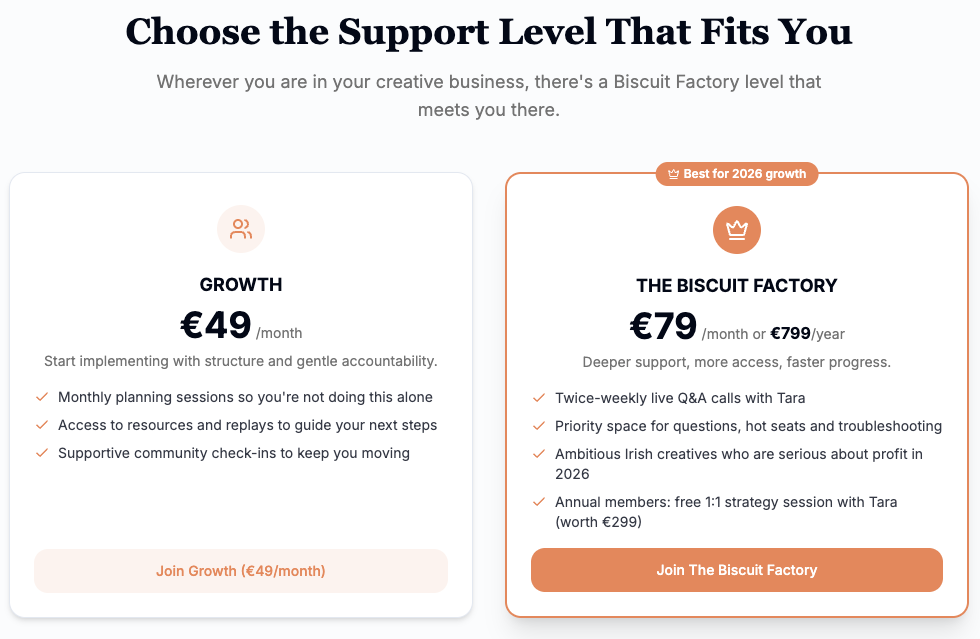
The platform offers live coaching, workshops, and templates covering pricing, sales strategies, and business planning specific to Irish creative enterprises. Browse the members directory of Irish creatives to discover potential collaborators, learn from diverse business approaches, and join a supportive community navigating similar challenges. Membership tiers suit various budgets and business stages, providing accessible support as you build your creative venture.
Frequently asked questions
What are the most profitable types of creative businesses in Ireland?
Profitability depends more on execution quality and market fit than business type alone. Digital and hybrid models generally offer higher scalability and revenue ceilings, but require sophisticated marketing and longer timeframes to profitability. Service-based businesses with premium positioning can achieve excellent returns with minimal overhead. Choose based on your skills and resources rather than chasing theoretical profit potential.
How do I know which creative business model suits my skills?
Apply the five selection criteria systematically. Assess your available capital, desired scalability, strongest creative and business skills, target market access, and capacity for operational complexity. Product models suit hands-on makers. Service models fit client-oriented communicators. Digital models reward technical and marketing skills. Honest self-assessment reveals your best starting point.
Can hybrid creative businesses be managed by solo entrepreneurs?
Hybrid models significantly increase management complexity compared to focused single-stream businesses. Solo entrepreneurs can successfully manage hybrid ventures, but typically only after proving competence in one model first. Build strong systems, set clear boundaries between business streams, and realistically assess your capacity before expanding. Starting hybrid from day one usually overwhelms new entrepreneurs.
What unique challenges do Irish creative businesses face in 2026?
Ireland's creative entrepreneurs navigate several distinct challenges. The relatively small domestic market pushes many toward international sales, requiring digital marketing sophistication and logistics management. Many creatives possess strong artistic skills but lack business training, creating gaps in pricing, marketing, and financial management. Digital platform competition intensifies globally whilst local support networks remain crucial for guidance. Join the Irish creative sector community to access peer support and practical business resources tailored to these specific challenges.