
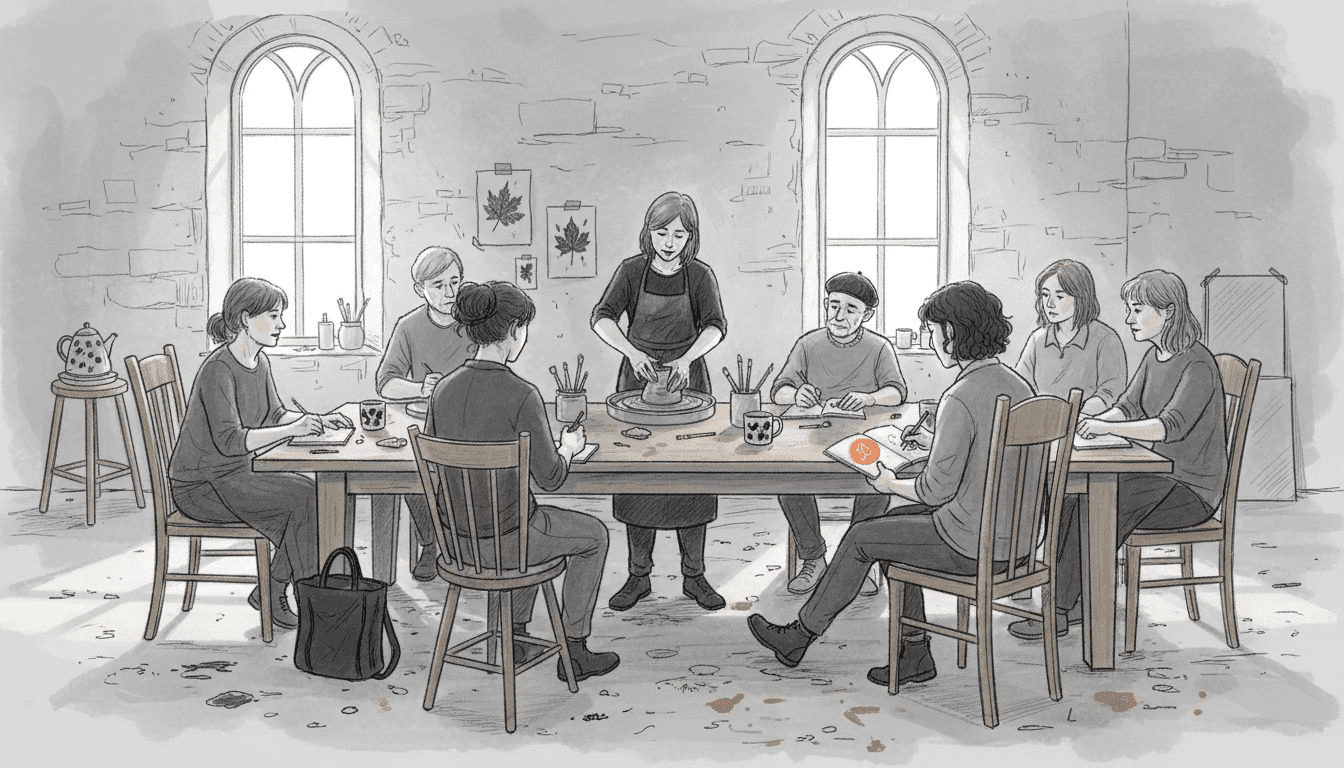
Making a creative business work in Ireland often means searching for connection, practical skills, and support beyond your studio walls. For many Irish artists and makers, workshops are more than classes—they're collaborative, hands-on spaces for learning and problem-solving that close the gap between creative talent and business stability. If you want real strategies to strengthen your income and expand your network, understanding how workshops drive growth is a crucial step forward.
Defining Workshops for Creative Entrepreneurs
Workshops for Irish creatives aren't fancy lectures where you sit passively. They're structured, hands-on sessions where you learn by doing, solving real problems, and connecting with other makers.
Think of them as collaborative spaces designed specifically for people like you. In the context of the Cultural and Creative Industries, workshops bring together creative talent with business knowledge through interactive activities.
What Makes a Workshop Different
A proper workshop differs fundamentally from a standard course or seminar. You're not just absorbing information—you're actively participating in creating solutions.
Key characteristics of workshops for creative entrepreneurs include:
- Hands-on experience: You work on actual problems, not theoretical exercises
- Collaborative learning: You exchange ideas with peers facing similar challenges
- Skill development: You gain practical abilities you can apply immediately to your business
- Networking opportunities: You build relationships with other creatives and mentors
- Knowledge sharing: You learn from experienced entrepreneurs and industry experts
The Interactive Element
What separates workshops from other learning formats is the emphasis on participation. Interactive, participatory events allow you to collaborate across different backgrounds and perspectives, addressing real challenges you face in your creative business.
You're not passively receiving information. You're co-creating solutions with others who understand your world.
Why Workshops Matter for Your Creative Business
Workshops directly address gaps in your business knowledge. Many Irish creatives are brilliant at their craft but need support with pricing, marketing, or scaling.
You benefit from:
- Gaining new skills specific to your needs
- Building a network of fellow creatives and mentors
- Getting feedback on your work or business ideas
- Learning from real examples and case studies
- Developing confidence in business decisions
Workshops transform isolated creative work into a collaborative, growth-focused activity where you learn alongside others navigating identical challenges.
Types of Workshops for Creatives
Workshops take different forms depending on their focus. Some address specific skills, whilst others tackle broader business challenges.
Common workshop types include:
- Technical skill workshops (photography techniques, jewellery design, painting methods)
- Business skills workshops (pricing strategies, social media marketing, financial planning)
- Networking workshops (connecting creatives, finding collaborators, building partnerships)
- Problem-solving workshops (tackling specific business obstacles you're facing)
- Masterclasses (deep dives led by experienced practitioners in your field)
The Role Within Your Broader Learning Journey
Workshops work best as part of your ongoing development, not as one-off events. They complement other learning methods and provide accountability for progress.
Many Irish creatives use workshops alongside mentoring, peer feedback, and self-directed learning to build sustainable, profitable businesses.
Pro tip: Choose workshops that address your most pressing business challenge right now—whether that's pricing your work fairly, finding your first wholesale customers, or scaling production—rather than attending every workshop available.
Types of Workshops Supporting Business Growth
Not all workshops are created equal. Some focus purely on technical skills, whilst others tackle the business side of running a creative enterprise. Understanding the different types helps you choose what actually matters for your growth right now.
Workshops tailored to creative SMEs address specific challenges you face. Whether you're struggling with pricing, finding customers, or scaling production, there's likely a workshop designed for your exact situation.
Skill-Building Workshops
These workshops teach you practical abilities you can apply immediately to your business. They're hands-on and focused on specific outcomes rather than theory.
Common skill-building workshops include:
- Digital tools training: Learning software for design, social media, or business management
- Production techniques: Improving craft quality, efficiency, or new methods
- Marketing and branding: Creating consistent visual identity and online presence
- Financial management: Understanding pricing, profit margins, and business accounts
- Writing and communication: Crafting compelling product descriptions and customer messaging
Business Growth and Market Expansion Workshops
These workshops address the commercial side of your creative business. They help you identify new opportunities and overcome scaling challenges.

They typically cover funding acquisition and market expansion strategies specific to the creative sector. You'll learn how to access grants, find wholesale buyers, or launch into new markets.
Networking and Partnership Workshops
Isolation is common for creatives working alone. Networking workshops deliberately bring people together to form meaningful connections and collaborations.
These sessions focus on:
- Building relationships with other makers and complementary businesses
- Finding wholesale partners or stockists for your products
- Creating collaborative projects that benefit all involved
- Accessing mentorship from experienced practitioners
- Supporting each other through challenges
The right workshop at the right time can accelerate your business growth by months or even years, connecting you with opportunities and knowledge that might otherwise take years to discover.
Innovation and Sustainability Workshops
Modern workshops increasingly address digital transformation and sustainable practices. These help you stay competitive whilst meeting customer expectations.
Topics include AI adoption, digital tools, and sustainable business practices that strengthen your resilience. You'll learn how innovation protects your business and appeals to environmentally conscious customers.
Specialist Workshops for Specific Challenges
Some workshops address unique problems faced by creative businesses. Examples include crowdfunding for cultural projects, social entrepreneurship models, and co-creation approaches for social impact.
These workshops treat your specific business model seriously rather than offering generic advice.
Here's a concise comparison of common workshop types supporting creative entrepreneurs:
| Workshop Type | Unique Focus | Ideal For |
|---|---|---|
| Technical skill workshops | Mastering specific creative techniques | Improving hands-on abilities |
| Business growth workshops | Expanding markets and revenue streams | Seeking commercial development |
| Networking workshops | Building strategic industry connections | Reducing isolation, finding partners |
| Innovation & sustainability workshops | Adopting new tools, eco practices | Staying competitive and resilient |
| Specialist workshops | Addressing niche sector challenges | Facing unique or complex issues |
Choosing the Right Workshop Type
The best workshop for you depends on your current bottleneck. Are you struggling with making sales, improving product quality, or finding collaborators?
Answer this first: What's preventing you from earning more money right now? Your answer points you towards the workshop type you actually need.
Pro tip: Attend workshops in clusters around a single challenge rather than scattering your time across many topics—building skills progressively in one area creates momentum and measurable results faster than dabbling in everything.
Key Benefits: Skill-Building, Confidence, and Networking
Workshops do three things brilliantly for Irish creatives. They build tangible skills, strengthen your belief in yourself, and connect you with people who understand your world. These three benefits compound together, creating real business momentum.
Most creatives overlook the confidence piece. You can learn pricing strategy in isolation, but hearing from peers facing identical challenges shifts something deeper inside you.
The Skill-Building Advantage
Workshops deliver hands-on knowledge you can apply to your business immediately. Unlike watching videos alone, you're learning alongside others and getting real feedback.
You gain practical abilities in:
- Business planning: Creating realistic growth targets and financial projections
- Marketing strategy: Understanding what actually works for creative businesses
- Pricing and profitability: Setting prices that cover costs and reward your expertise
- Production efficiency: Making your work faster or higher quality
- Customer communication: Writing compelling descriptions and engaging with buyers
These skills close gaps between your creative talent and business success. And yes, I learned the hard way that talent alone doesn't pay bills.
Building Genuine Confidence
Confidence in business comes from two sources: knowledge and permission. Workshops provide both.
You gain self-efficacy and creative problem-solving abilities through active practice in safe environments. You share experiences with other makers, discovering you're not alone in your struggles. You receive feedback that reinforces what you're doing well.
This confidence translates directly to bolder decisions. You raise your prices. You approach a wholesale buyer. You launch a new product.
Confidence isn't arrogance. It's simply knowing you can handle what comes next because you've learned from others who've been there.
The Networking Effect
Isolation kills creative businesses. Workshops deliberately solve this problem by bringing people together.
Networking at workshops provides:
- Access to mentors who've solved problems you're facing
- Peer support from makers in similar situations
- Partnership opportunities with complementary businesses
- Customer referrals from trusted connections
- Collaborations that expand what you can offer
These relationships often matter more than the workshop content itself. A single connection with the right wholesale buyer or collaborator justifies attending.
The Compounding Effect
When you build skills, confidence, and connections together, something powerful happens. You're not just slightly better at one thing—you're fundamentally changed as a business owner.
You become someone who takes action. Someone who knows what to do. Someone who isn't alone.
Real-World Impact
Workshops that emphasise hands-on practice, feedback, and safe environments for learning create lasting change. You're not just accumulating information. You're building capability that sticks.
Many Irish creatives report that a single well-chosen workshop triggered months of business growth.
Pro tip: After attending a workshop, schedule a coffee with two other attendees within a week—this cements the networking benefit and ensures you actually implement what you learned rather than letting it fade.
Common Pitfalls to Avoid When Hosting Workshops
If you're thinking about hosting workshops for other Irish creatives, avoid the mistakes that kill participant engagement and waste everyone's time. Most workshop failures come from the same preventable issues.
You'll spend effort planning a workshop. Make sure that effort actually pays off by dodging these common traps.
Vague Goals and Poor Planning
Workshops without clear objectives feel wandering and unproductive. Participants leave confused about what they learned or why they came.
Insufficient planning and unclear goals sabotage even brilliant content. You need to define what participants will actually achieve, not just what topics you'll cover.
Before hosting, answer these questions:
- What specific outcome will attendees walk away with?
- What problem does this workshop solve?
- How will participants know they've succeeded?
- What will they be able to do differently?
Vague goals lead to vague results. Participants sense the lack of direction and disengage.
Inviting the Wrong Mix of People
Mixing complete beginners with advanced practitioners creates frustration on both sides. Beginners feel lost. Advanced makers feel bored.
The right participant mix matters enormously. A pottery workshop for mixed skill levels needs different content than one designed solely for potters scaling production.
Be specific about who you're inviting:
- By experience level: Beginners, intermediate, advanced, or mixed?
- By business stage: Just starting, generating income, scaling?
- By sector: Jewellery makers, painters, textile artists, or mixed crafts?
- By goals: Improving craft quality, finding customers, increasing prices?
The tighter your target, the better your workshop serves everyone.
Losing Momentum and Engagement
Workshops fail when facilitators lecture instead of facilitating. Passive listening kills energy quickly, especially for creatives used to hands-on work.
Interactive facilitation keeps people engaged. This means activities, group discussion, problem-solving, and participant contribution throughout, not just at the end.
Maintain engagement through:
- Breaking content into short segments (15-20 minutes maximum)
- Including hands-on activities or group exercises regularly
- Asking questions that require thinking, not just listening
- Creating space for peer discussion and sharing
- Varying the format frequently
A workshop where participants talk more than the facilitator is a workshop that actually sticks with people.
Inadequate Preparation and Logistics
Running out of materials mid-workshop, poor room setup, or missing supplies undermines your credibility immediately. Logistics matter because they signal whether you respect people's time.
Prepare thoroughly:
- Test all materials and equipment beforehand
- Arrange seating for conversation, not rows facing a screen
- Confirm numbers and adjust content accordingly
- Have backup plans for technical issues
- Provide clear instructions written down, not just verbal
Small logistical failures accumulate into bad experiences.
Failing to Build on Outcomes
Workshops end, participants go home, and nothing changes. This happens when you don't create follow-up structures or accountability.
Extend the workshop's impact by offering post-workshop support: group chats, follow-up calls, accountability partnerships, or access to resources for continued learning.
Pro tip: Spend as much time on workshop preparation and participant selection as you do on content—many facilitators get this backwards, then wonder why engagement drops halfway through.
Integrating Workshops Into a Sustainable Creative Practice
Workshops shouldn't be one-off events that disappear from your practice. The most effective approach weaves them into your ongoing business rhythm, creating continuous learning and long-term growth.
Sustainable creative practices build on momentum. One workshop leads to application, then reflection, then the next workshop. This cycle compounds over time.
Beyond One-Off Events
A single workshop creates a spike of learning, then the impact fades. Sustainable integration means treating workshops as part of your regular rhythm, not isolated experiences.
Combining artistic activities with preparatory and reflective workshops builds confidence and deepens learning over time. You prepare before attending, learn during, then reflect and apply afterwards.
This three-part approach transforms workshops from temporary boosts into permanent practice shifts.
Planning a Workshop Rhythm
Decide how workshops fit into your annual calendar. Most Irish creatives benefit from attending two to four targeted workshops per year, spaced strategically around business cycles.
Consider integrating workshops around:
- Seasonal business peaks: Workshops before busy seasons to prepare
- Key business decisions: When you're considering price increases, new products, or market expansion
- Skill development cycles: Building one capability thoroughly over several months
- Networking windows: Connecting with peers at specific times of year
Planning ahead ensures workshops serve your actual business needs rather than filling random gaps.
Here is a summary of workshop planning strategies to maximise sustainable business growth:
| Planning Area | Key Consideration | Impact on Business |
|---|---|---|
| Calendar integration | Schedule before peak seasons | Supports timely skill application |
| Challenge alignment | Match workshops to main bottlenecks | Produces targeted, measurable progress |
| Peer reflection | Discuss and review post-workshop | Deepens learning, increases accountability |
| Progressive skill-building | Attend sequential, related sessions | Builds expertise efficiently over time |
Creating Preparation and Reflection Structures
The real value emerges before and after the workshop itself. Preparation clarifies what you need to learn. Reflection ensures you actually apply it.
Before attending a workshop:
- Identify your specific challenge or goal
- Note what you currently do or believe about that topic
- Write down one thing you want to change
- Share your intention with an accountability partner
After the workshop:
- Reflect on what surprised you or challenged your thinking
- Identify three specific actions you'll take
- Schedule when you'll implement each one
- Share progress with your accountability partner
This structure turns passive attendance into active transformation.
Connecting Workshops to Your Creative Community
Workshops gain power when you process them with peers. Hosting small reflection circles with other attendees deepens learning and builds accountability.
Creative and embodied practices foster environmental awareness and community resilience by integrating diverse knowledge forms. Your experience matters. Other makers' experience matters. Together, you see patterns and solutions neither of you would find alone.
Consider creating a small group of three to five makers who attend workshops together, then meet monthly to discuss applications.
Building Your Learning Path
Think of workshops as steps on a longer learning journey, not destinations themselves. Each workshop builds on previous learning and prepares for the next challenge.
Your progression might look like:
- First workshops: Business foundations (pricing, customer finding)
- Middle workshops: Scaling and production (efficiency, wholesale)
- Advanced workshops: Innovation and sustainability (new products, impact)
Sustainable workshop integration turns learning from something you do occasionally into something your creative business runs on.
Workshops work best when they're part of a deliberate growth plan, not random choices based on what's available.
Pro tip: Schedule your next year's workshops now by identifying your three biggest business challenges, then finding one workshop for each challenge spaced quarterly—this ensures intentional learning that compounds throughout the year.
Harness the Power of Workshops to Transform Your Creative Business
Struggling with pricing your work, finding wholesale buyers or building confidence as an Irish creative? The key challenges highlighted in the article around skill gaps, isolation, and unclear growth paths are exactly what The Biscuit Factory is designed to solve. Our tailored workshops and live coaching sessions provide hands-on, practical support to help you gain the skills you need and connect with a community that truly understands your creative journey.
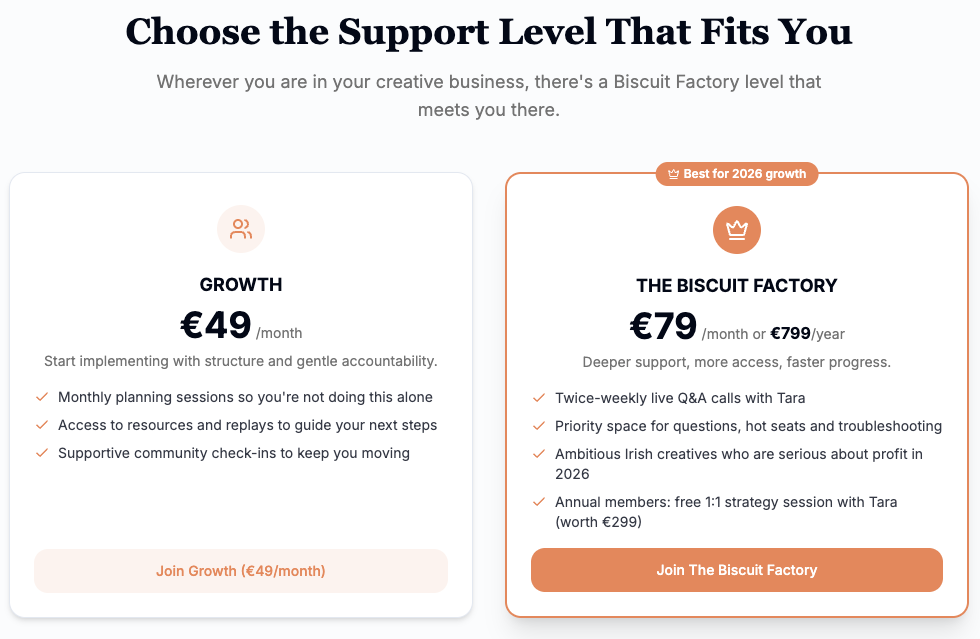
Take control of your business growth today by joining our thriving membership platform. With a focus on actionable learning, peer collaboration and expert guidance, you can move beyond frustration to real progress. Explore how you can develop confident pricing strategies, build your network and map out your 2026 growth plan with The Biscuit Factory workshops and resources. Don't let uncertainty hold you back any longer — start growing your sustainable creative business now.
Frequently Asked Questions
What are the main benefits of attending workshops for creative entrepreneurs?
Attending workshops helps creative entrepreneurs build practical skills, gain confidence in their business decisions, and network with peers and mentors in their industry. These aspects combine to accelerate business growth and overcome specific challenges.
How do workshops differ from traditional courses or seminars?
Workshops are hands-on and interactive sessions that focus on collaborative learning. Unlike traditional courses, where information is primarily delivered through lectures, workshops require participants to engage actively in problem-solving and skill development.
What types of workshops should creative entrepreneurs consider?
Creative entrepreneurs can consider a range of workshops including technical skills workshops, business growth workshops, networking sessions, innovation workshops, and specialist workshops aimed at specific challenges. Choosing the right type depends on the entrepreneur's current needs and goals.
How can I effectively integrate workshops into my creative business practice?
To effectively integrate workshops, consider scheduling them strategically throughout the year, align them with your business challenges, and create structures for preparation and reflection. This ensures that knowledge gained from workshops is applied to support ongoing business development.