

Struggling to fill seats or build lasting connections through your creative workshops? Many emerging artists and makers across Ireland face this challenge, especially when balancing art with other income streams. Effective workshop facilitation is more than teaching skills—it shapes community, participant motivation, and your earning potential. This guide shows how aligning your workshop purpose and audience leads to meaningful engagement, practical session design, and professional growth.
Table of Contents
- Step 1: Identify your workshop purpose and audience
- Step 2: Design engaging and practical session activities
- Step 3: Prepare essential materials and creative space
- Step 4: Facilitate dynamic participation throughout
- Step 5: Evaluate outcomes and gather constructive feedback
Quick Summary
| Key Point | Explanation |
|---|---|
| 1. Define Workshop Purpose Clearly | Articulate a specific purpose to guide the workshop's content and structure for meaningful outcomes. |
| 2. Understand Your Audience Deeply | Identify your target participants’ skill levels and motivations to tailor the workshop experience effectively. |
| 3. Design Engaging Session Activities | Create practical activities that connect to your learning outcomes, enabling active participation and skill development. |
| 4. Prepare Materials and Space Thoroughly | Ensure high-quality materials and a well-organised venue to foster a professional atmosphere and focus on creativity. |
| 5. Gather and Evaluate Feedback Constructively | Collect diverse feedback post-workshop to assess success against goals and improve future sessions. |
Step 1: Identify your workshop purpose and audience
Before you design your workshop content or book a venue, you need absolute clarity on two things: why you're running this workshop and who needs to be in the room. These two decisions shape everything that follows, from your pricing to your materials to how you market the experience.
Start by getting crystal clear on your workshop purpose. What's the core outcome you want participants to walk away with? Are you teaching a specific skill like pottery throwing or screen printing? Building community amongst emerging makers? Creating a space where people feel confident enough to experiment? Your purpose might combine multiple goals, and that's fine, but you should be able to describe it in one clear sentence.
Next, identify your target audience with real specificity. Who are these people? Rather than thinking "artists" or "makers", go deeper:
- Skill level: Are they complete beginners, intermediate practitioners, or advanced creators looking to refine techniques?
- Creative background: Do they already identify as artists, or are these people exploring creativity for the first time?
- Geographic location: Are you running this locally within Ireland, online, or both?
- Motivation: Why would they attend? Social connection, skill-building, a break from routine, or starting a creative side income?
Your workshop succeeds when your purpose aligns perfectly with what your audience actually wants from the experience.
Think about the Irish maker community specifically. Many emerging artists are juggling creative practice with other income streams. They might be attending your workshop to expand their skills for commercial purposes, to connect with other creatives in their area, or simply to invest in themselves. Understanding this context helps you design something genuinely useful rather than generic.
Take time to clarify your workshop objectives by asking yourself practical questions. Who has told you they need this workshop? What problem are you solving? Who can afford to attend, and where do they spend their time online or in your community?
Professional tip Write down your purpose in one sentence and your ideal participant in 3-4 bullet points, then test these assumptions by asking 3-5 people from your network if they match the workshop you're imagining.
Step 2: Design engaging and practical session activities
Now that you know your purpose and audience, it's time to build the actual experience. Good session activities keep people engaged, teach something meaningful, and leave participants feeling capable. This is where your workshop transforms from an idea into reality.
Start by mapping out your session structure. A typical workshop flows through distinct phases, each serving a specific purpose. You might open with an icebreaker that builds connection, move into a demonstration where you show key techniques, transition into hands-on practice where participants try things themselves, and close with reflection or sharing.
When you design workshop activities, every exercise should connect directly to your stated learning outcome. If your purpose is teaching screen printing, your activities should build toward participants creating their own designs. If it's about creative confidence, your activities should involve experimentation and positive feedback rather than rigid instruction.
Consider how to structure your time thoughtfully:
- Introduction segment (10-15 minutes): Welcome, explain what you'll create together, set a relaxed tone
- Demonstration (15-20 minutes): Show techniques clearly, explain your thinking, answer questions
- Hands-on practice (30-45 minutes): Let people work at their own pace, circulate to offer support
- Break or reflection (10 minutes): Give people space to pause and process
- Closing (10 minutes): Share work, celebrate attempts, explain next steps
The best activities balance structure with creative freedom, giving people enough guidance to succeed whilst leaving room for their own ideas.
Remember that your participants have different experience levels and learning speeds. One person might finish their piece in twenty minutes whilst another needs forty-five. Build flexibility into your activities so everyone feels successful. This might mean offering optional extensions for fast workers or simplified versions for people still building confidence.
When designing hands-on activities for skill-building, think practically about materials, space, and cleanup. Do you have enough supplies? Can people work comfortably without elbowing each other? How will you manage mess? These logistics matter because they either support engagement or create frustration.
Professional tip Test your activity yourself before the workshop, timing each section honestly and noting where participants might get stuck, then build in an extra five minutes buffer for each phase.
Step 3: Prepare essential materials and creative space
Your workshop only works if people have what they need and feel inspired by where they're creating. This step is about getting practical things right so participants can focus entirely on the creative work ahead.
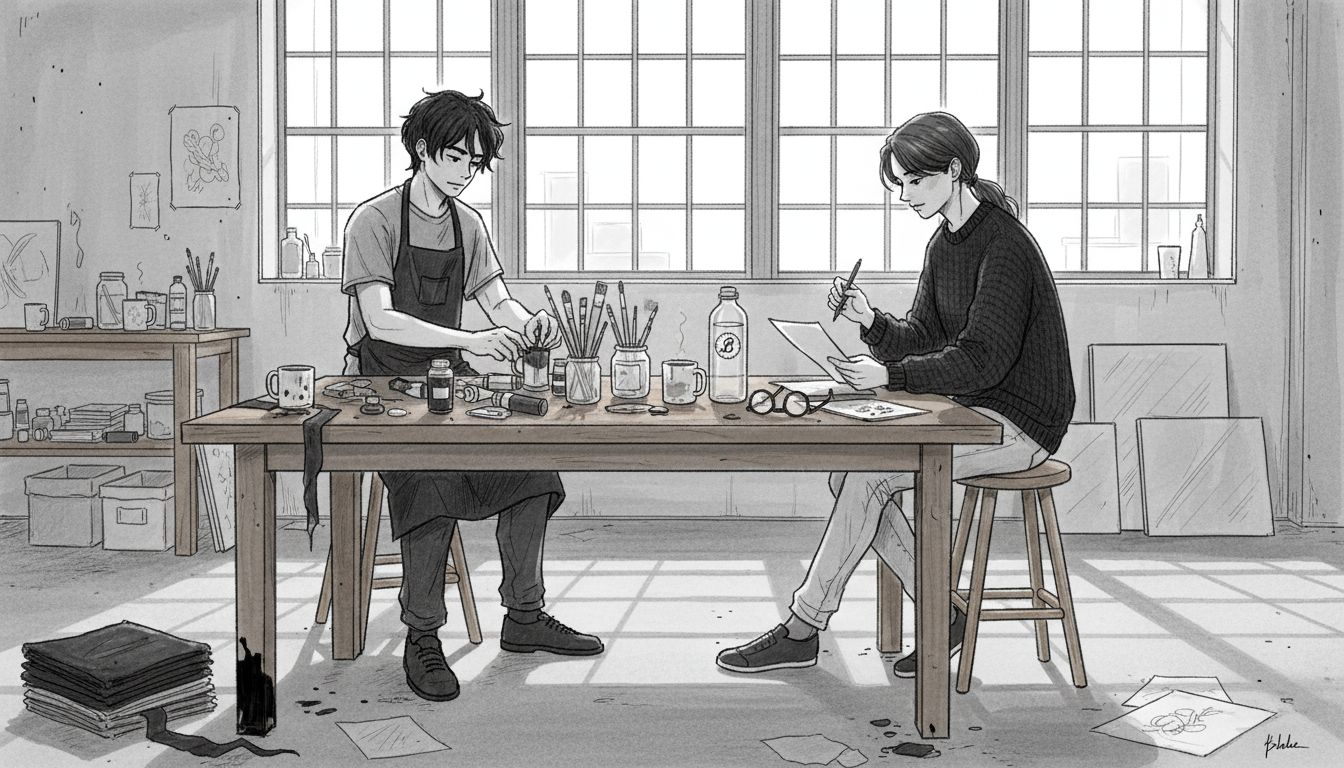
Start by creating a comprehensive supply list tailored to your specific workshop. If you're teaching jewellery making, you'll need pliers, wire, beads, and workspace. For a textile dyeing workshop, gather dyes, fabric, water sources, and protective equipment. List everything you'll demonstrate with, plus materials for each participant, then add twenty percent extra for mistakes and experiments.
When you prepare materials for creative workshops, quality matters more than quantity. Cheap brushes shed bristles. Low-grade paper tears easily. Dull scissors frustrate people within minutes. Invest in decent supplies and your workshop immediately feels more professional and participants take their work more seriously.
Check your materials two weeks before the workshop and again the day before. Here's what to verify:
- All items are in working condition and not expired or damaged
- Quantities match your participant numbers plus extras
- Specialist items aren't backordered or unavailable
- You've tested anything new or unfamiliar
- Safety equipment is accessible (first aid, protective gear, ventilation)
A well-organised creative space signals to participants that you respect their time and want them to succeed.
Now think about your venue. You need adequate lighting, space, and accessibility that match your activities. Natural light is ideal but not always possible. If you're using overhead fluorescents, supplement with task lighting. Ensure tables are sturdy enough for people to lean on whilst working and arrange them so everyone can see demonstrations.
Arrange your space so materials are accessible without people having to squeeze past each other. Set up a central supply station or place essentials within arm's reach of each workspace. Have a designated area for wet or messy items away from bags and valuables. Leave clear pathways so you can circulate and support people.
Professional tip Create a checklist of every material and tool you need, photograph your setup from a participant's perspective, then walk through it yourself noting any awkward reaching, poor sightlines, or traffic bottlenecks before people arrive.
Step 4: Facilitate dynamic participation throughout
The difference between a workshop that people forget and one that changes how they think about themselves comes down to how you facilitate. Your job is to keep energy moving, make space for everyone's voice, and respond to what's actually happening in the room rather than rigidly following your plan.
Start with a strong opening that sets the tone. An effective icebreaker does more than kill awkward silence. It signals that this is a space where people can be themselves, make mistakes, and have fun. Ask participants to share their name and one reason they came, or invite them to show their favourite tool from the materials table. These small moments build connection before the real work begins.
When you facilitate art workshops effectively, actively manage group dynamics and energy levels. Watch for people who've withdrawn or seem frustrated. Notice when the room feels flat and needs a boost. Are people talking to each other or sitting in isolation? Is someone dominating conversation whilst others stay silent? These observations help you adapt in real time.
Use these facilitation strategies throughout your session:
- Circulate constantly rather than standing at the front, moving close to people working quietly and asking genuine questions about their process
- Celebrate attempts, not just outcomes, praising effort and experimentation so people feel safe trying bolder things
- Invite peer feedback by asking participants to share observations about each other's work, building community and teaching eyes
- Manage pacing flexibly, allowing extra time if energy is high and people are engaged, or shifting activities if attention is dropping
- Acknowledge different contributions explicitly so introverted makers feel valued alongside the naturally chatty ones
Your willingness to respond to the actual group, rather than your predetermined plan, is what separates a good workshop from a genuinely transformative one.
Remember that engagement increases when facilitators adapt to group responses rather than plough through regardless. If your demonstration sparked unexpected questions, answer them fully. If people are moving faster than expected, have extension activities ready. If energy is low mid-afternoon, take a proper break or shift to something more energising.
Check in regularly with participants without making it feel like interrogation. Ask open questions: "What's working well for you?" "What feels tricky?" "What would help right now?" These conversations give people permission to be honest and help you adjust support where it's needed.
Professional tip Record yourself facilitating a practice session, then watch it with fresh eyes noting how much you actually move around the space, which participants you engage with most, and where silence stretched longest—then consciously adjust these patterns in your actual workshop.
Step 5: Evaluate outcomes and gather constructive feedback
Your workshop doesn't end when people leave the room. The real learning happens when you review what actually worked, what fell flat, and what your participants genuinely took away. This feedback loop transforms each workshop into preparation for the next one.
Start by clarifying what success looks like before you gather feedback. Did you want participants to complete a finished piece? Feel more confident experimenting? Make meaningful connections with other makers? Learn a specific technique? Your original workshop goals should guide what you measure. Aligning workshop goals with measurable outcomes helps you ask the right questions and interpret responses accurately.
Use multiple feedback methods rather than relying on a single approach. Different people express themselves differently, and some will skip a questionnaire but happily chat informally.
Here's what you might gather:
- Brief written feedback right at the end using 3-5 simple questions on paper or via a phone survey link
- Informal conversation during pack-up or whilst people share their work, noting what resonates
- Follow-up email a week later asking what they've done with their new skills since attending
- Observation notes from the session itself recording energy levels, engagement, and moments that surprised you
The most valuable feedback often comes informally when you ask genuine questions and listen without defensiveness.
When you evaluate workshop outcomes and collect feedback, focus on both what worked and what could improve. Ask specific questions like "What was the most useful part?" and "What would make this workshop better next time?" rather than vague "Did you enjoy it?" Specificity gives you actionable information.
Pay special attention to feedback about pacing, materials, space, and your facilitation style. Did people feel rushed? Did anyone lack supplies? Could they see demonstrations clearly? Were there moments they felt lost or unsupported? This practical feedback directly shapes your next iteration.
Document everything in a simple template you can reference next time. Note which activities generated the most engagement, which materials worked best, which timing estimates were realistic, and what logistical changes would help. Share positive feedback with yourself because running workshops is genuinely challenging work.
Professional tip Ask one specific question at the end: "If you could change one thing about today, what would it be?" This single question often reveals more than lengthy questionnaires because people focus their energy on what actually mattered to them.
Here is a summary of key workshop planning steps and their primary focus:
| Step | Main Focus | Desired Outcome |
|---|---|---|
| Identify purpose & audience | Defining goals and participants | Clear objectives and relevant attendees |
| Design activities | Creating engaging tasks | Active learning and skill development |
| Prepare materials & space | Ensuring resources and venue are ready | Professional environment and smooth session |
| Facilitate participation | Managing group dynamics | High engagement and positive experience |
| Evaluate & gather feedback | Measuring results and collecting input | Continuous improvement and evidence of impact |
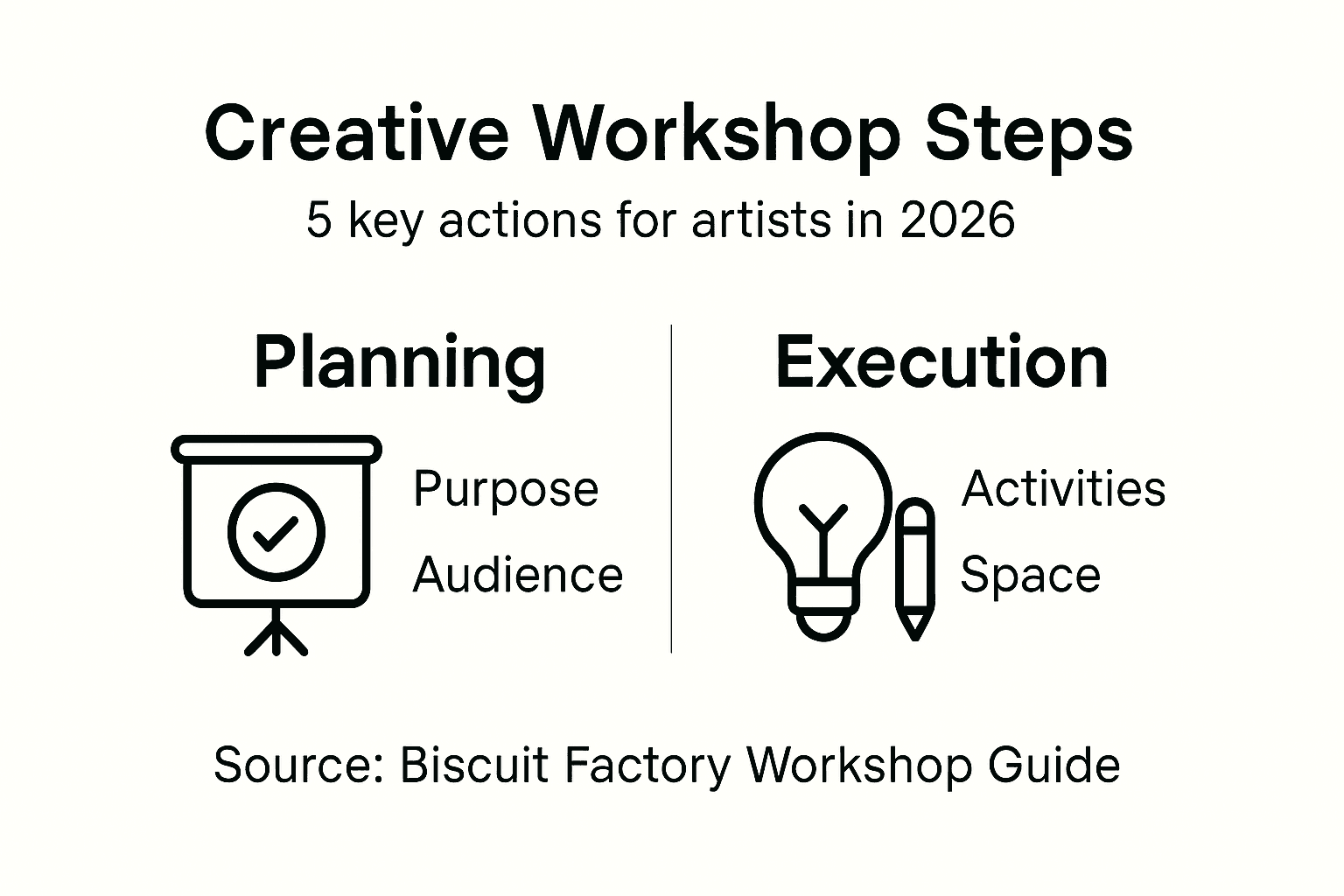
Elevate Your Creative Workshops with The Biscuit Factory
Running creative workshops successfully means getting clear on your workshop purpose, designing engaging activities, preparing the right materials, and facilitating dynamic participation. But you don’t have to navigate these challenges alone. Whether you are aiming to build community, boost confidence, or master practical skills, The Biscuit Factory offers tailored support to bring your vision to life.
Join an Irish community dedicated to helping artists and makers like you build sustainable, profitable creative businesses. Gain access to live coaching, practical templates, and focused workshops that directly address key pain points such as pricing your sessions, planning your content, and engaging your audience dynamically. Start mapping your growth for 2026 today and transform not only your workshops but also your creative career by becoming part of The Biscuit Factory. Don’t miss this opportunity to connect with peers and experts while accessing resources designed specifically for Irish creative entrepreneurs. Visit The Biscuit Factory now and take the next step toward making your workshops truly impactful.
Frequently Asked Questions
How can I identify the purpose and audience for my creative workshop?
To identify your workshop's purpose and audience, clarify the core outcome you want participants to achieve. Write down your purpose in one sentence and outline your ideal participant in 3-4 bullet points. Test these assumptions with 3-5 people from your network to ensure alignment.
What types of session activities should I include in my creative workshop?
Include interactive session activities that are directly linked to your learning objectives. For instance, if you're teaching screen printing, structure activities around creating designs and allow enough time for hands-on practice, such as 30-45 minutes of creative work.
How do I prepare materials and set up the creative space for my workshop?
Create a comprehensive supply list tailored to your workshop, ensuring quality over quantity. Check your materials two weeks prior and again the day before, making sure everything is in working order and your venue is optimally arranged for accessibility and comfort.
What strategies can I use to facilitate dynamic participation during the workshop?
To facilitate dynamic participation, actively manage group dynamics by circulating among participants, celebrating their attempts, and encouraging peer feedback. Establish an engaging opening with an icebreaker, and be flexible with your pacing to adapt to the group's energy levels throughout the session.
How do I evaluate the outcomes of my creative workshop?
Evaluate outcomes by clarifying your success metrics before collecting feedback. Use multiple methods such as written feedback, informal conversations, and follow-up emails to gather insights that focus on both what worked well and areas for improvement, ensuring continuous refinement for future workshops.
What are some common pitfalls to avoid when running creative workshops for artists?
Common pitfalls include failing to identify your target audience or workshop purpose clearly and using poor-quality materials that frustrate participants. Avoid rushing through activities; instead, allow time for hands-on practice and adapt to the needs of your participants to enhance their overall experience.