

Making genuine connections as a creative in Ireland can feel overwhelming when every event promises a new opportunity. Yet knowing where to find creative networking spaces is fundamental for building your reputation and visibility. Both local gatherings and expansive European networks offer access to workshops, peer learning, and collaborative platforms designed for artists and entrepreneurs. This guide points out practical ways to identify the right opportunities and lays the groundwork for meaningful growth within Ireland’s vibrant creative sector.
Table of Contents
- Step 1: Identify networking opportunities in the creative sector
- Step 2: Prepare your introduction and portfolio for engagement
- Step 3: Build authentic connections with industry peers
- Step 4: Leverage support platforms for continuous growth
- Step 5: Evaluate your networking impact and refine approach
Quick Summary
| Key Insight | Explanation |
|---|---|
| 1. Identify specific networking opportunities | Focus on local events, creative hubs, and online platforms to connect with professionals in your field. |
| 2. Perfect your introduction and portfolio | Prepare a concise introduction and a well-organised portfolio to effectively communicate your creative work and value. |
| 3. Build genuine relationships | Prioritise listening and showing interest in others to form authentic connections rather than just collecting contacts. |
| 4. Engage with supportive platforms | Use professional platforms for ongoing development, mentorship, and access to resources relevant to your creative practice. |
| 5. Regularly assess networking efforts | Evaluate your networking activities to determine what is effective and adjust your strategy for better outcomes. |
Step 1: Identify networking opportunities in the creative sector
Finding the right networking spaces is your foundation for meaningful connections. You need to know where creative professionals gather, both locally in Ireland and across broader creative networks. This step helps you locate events, communities, and platforms that align with your practice and business goals.
Start by exploring what's available in your immediate area. Ireland's creative sector is vibrant, with numerous opportunities scattered across Dublin, Cork, Galway, and beyond. Look for:
- Gallery openings and art exhibitions in your region
- Creative industry meetups hosted by local organisations
- Workshops and masterclasses offered by creative professionals
- Community studios and shared working spaces
- Local maker markets and craft fairs
- Industry-specific conferences or symposiums relevant to your discipline
Beyond local events, consider larger networks. European creative networks operate across the continent and connect thousands of cultural professionals through peer-to-peer learning and workshops. These platforms offer structured opportunities to meet fellow creatives outside your immediate community, exchange ideas across borders, and access knowledge specifically designed for your sector.
You should also investigate creative hubs near you. These serve as focal points where creative professionals naturally congregate. Hubs typically host regular events, provide collaborative workspace, and facilitate introductions between members. They're invaluable for discovering who else operates in your creative field and what projects they're working on.
Don't overlook digital spaces. Online communities, social platforms, and virtual events have become legitimate networking channels. Many Irish creatives now maintain active presences on platforms where peers gather, share work, and discuss industry challenges. This is especially useful if geography limits your in-person options.
Research memberships or partnerships with professional bodies related to your practice. Whether you're a visual artist, designer, maker, or entrepreneur, relevant organisations often host members-only networking sessions, talks, and collaborative opportunities.
Here is a summary contrasting the main types of creative networking spaces:
| Networking Space | Typical Activities | Ideal For | Unique Advantage |
|---|---|---|---|
| Local Events | Gallery openings, workshops | Early-stage creatives | Personal introductions, regional contacts |
| Creative Hubs | Shared studios, group meetups | Collaborative practitioners | Regular collaboration, project visibility |
| Digital Platforms | Online forums, virtual events | Remote or busy professionals | Flexible access, broader reach |
| Professional Bodies | Members-only sessions, talks | Established artists, entrepreneurs | Sector-specific knowledge, vetted connections |
The best networking opportunities are those aligned with your actual work and audience, not just any event with creatives present.
Pro tip: Create a simple spreadsheet tracking networking events, hubs, and communities you discover over the next month. Note the type of creatives who attend, event frequency, and whether the vibe matches your business goals. This becomes your personalised networking map and helps you prioritise where to invest your time.
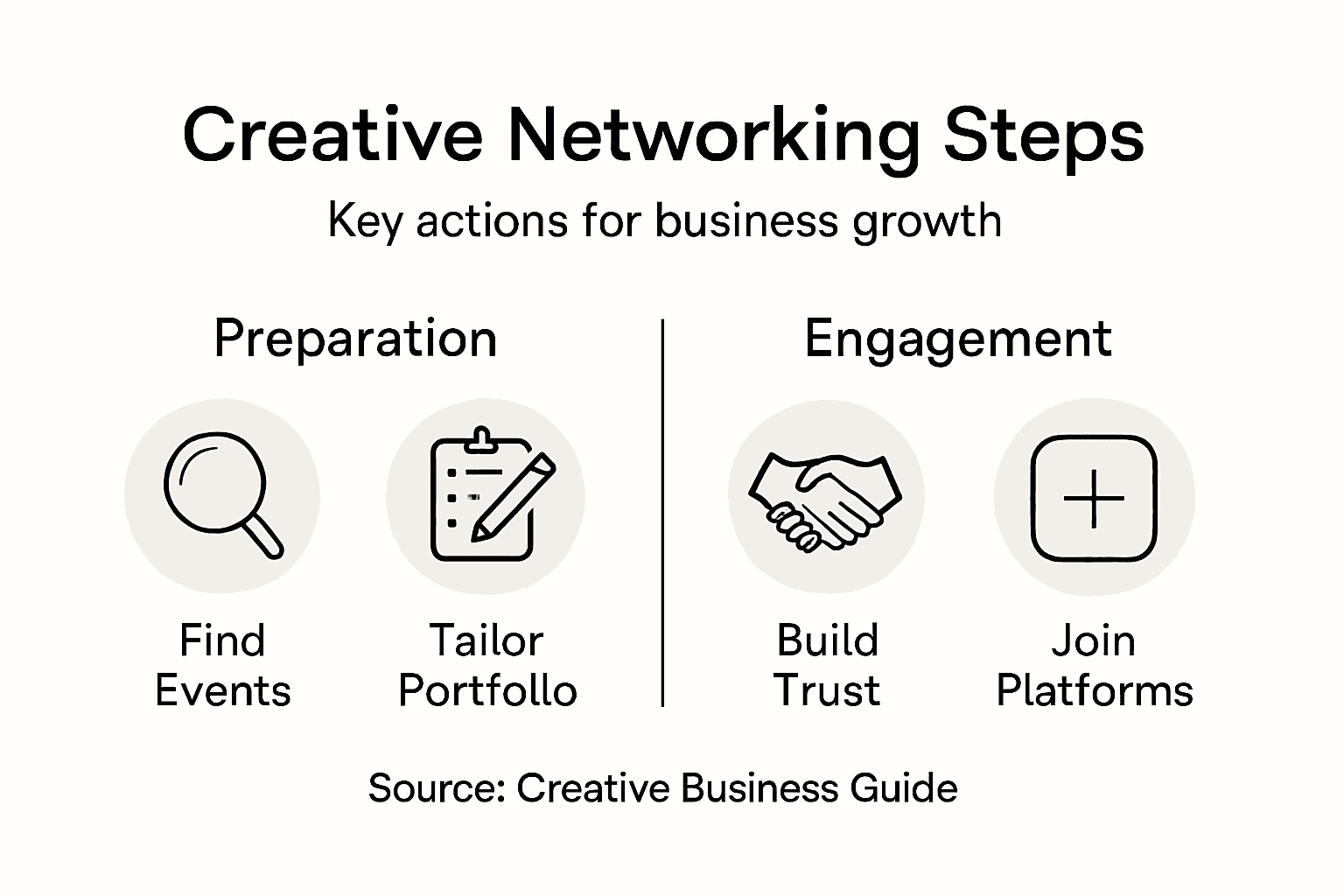
Step 2: Prepare your introduction and portfolio for engagement
Your introduction and portfolio are your first impression at networking events. These tools communicate who you are, what you create, and why someone should care. Getting them right transforms casual conversations into meaningful professional connections.
Start with your personal introduction. This is not your life story, but a clear, concise explanation of your creative practice and business focus. Aim for 30 seconds when spoken aloud, or two to three sentences when written. Include what you make, who you make it for, and what makes your approach distinctive. For example, if you're a ceramicist, mention your speciality (handthrown functional ware, sculptural pieces) and perhaps your target market (hospitality designers, collectors, home décor enthusiasts).
Your portfolio should demonstrate both artistic skill and business capability. When preparing materials for networking, consider what creative innovators must showcase in professional settings, which includes clarity about your practice, your unique value proposition, and your ability to deliver quality work. Structure your portfolio to include:
- Your best work (quality over quantity matters far more)
- Clear context for each piece (title, date, medium, inspiration)
- Professional photography or documentation
- Information about commissions or collaborations you've completed
- Testimonials or evidence of client satisfaction
- Information about your creative process or philosophy
Consider creating different versions of your portfolio for different audiences. A gallery might want to see your artistic range, whilst a brand seeking collaboration wants to see how your work aligns with their aesthetic. Digital portfolios work well for most networking contexts because they're easy to share via email or phone.
Your introduction should address potential questions before they're asked. What problem does your work solve? What audience values what you create? What's your professional background? Being able to answer these questions fluently makes conversations flow naturally and positions you as someone serious about their practice.
Also prepare specific examples of work you're proud of and can discuss in detail. When networking conversations turn to your practice, having interesting stories about particular pieces, projects, or commissions gives substance to your introduction. People connect with stories far more readily than generalisations.
Your introduction isn't about listing credentials; it's about giving people a reason to remember you and want to work with you.
Pro tip: Record yourself delivering your introduction aloud and listen back critically. Does it sound natural and confident, or rehearsed and stiff? Practise until you can deliver it conversationally without sounding like you're reciting a script, then refine it based on real networking feedback.
Step 3: Build authentic connections with industry peers
Authentic connections are the lifeblood of creative networking. These aren't transactional relationships where you simply exchange contact details and move on. Real connections form when you show genuine interest in other creatives, their work, and their challenges.
Start by listening more than you talk. When you meet someone at a networking event, ask about their practice, their current projects, and what brought them to the event. People remember those who take interest in them, not those who immediately launch into their own pitch. Listen for genuine commonalities or ways your work might complement theirs, rather than looking for immediate opportunities.

Find common ground beyond business. Perhaps you both source materials from the same suppliers, work in adjacent disciplines, or share frustrations about the Irish creative market. Authentic creative partnerships thrive when built on mutual understanding and shared challenges. These human connections form the foundation for future collaboration or referrals.
Focus on providing value before asking for any. Can you introduce someone to a potential client, collaborator, or resource? Can you share useful information about funding opportunities or studio spaces? Can you offer honest feedback on their work? When you lead with generosity, people naturally want to support you in return.
Build relationships over time. Don't expect every networking conversation to lead somewhere immediate. Some of your most valuable connections might take months or years to develop into something tangible. Check in occasionally with people you've met, share their work on your platforms, or invite them to events relevant to their interests.
Be intentional about follow-up. After meeting someone promising, send a genuine message within a few days. Reference something specific from your conversation to show it wasn't just surface-level chat. Suggest a concrete next step if appropriate: a coffee meeting, a studio visit, a collaboration exploration.
Avoid the trap of collecting business cards like trophies. One meaningful connection with someone whose work you genuinely admire and who understands yours is worth far more than twenty superficial contacts.
Authentic connections happen when you're genuinely interested in others' success, not just your own.
Pro tip: After each networking event, spend 15 minutes identifying the three most promising connections and jotting down one specific thing you remember about each person. Use these notes when following up, making your outreach personal rather than generic.
Step 4: Leverage support platforms for continuous growth
Networking isn't a one-time effort; it requires ongoing engagement with platforms and communities that support your development. Support platforms connect you with resources, mentorship, funding opportunities, and peers who understand your challenges. They transform networking from sporadic event attendance into sustained professional growth.
Identify which platforms align with your practice and business stage. Research what's available locally in Ireland and across Europe. Some platforms focus on specific creative disciplines, whilst others support broad creative entrepreneurship. Look for communities offering more than just social gatherings, ones that provide actual business support.
Understand what each platform offers beyond networking. Quality support platforms typically provide access to mentorship, training, funding opportunities, and market connections. They help you develop skills you need for business growth, not just meet other creatives. For example, European support platforms guide creatives towards relevant opportunities and connect them with industry experts for sustainable professional development.
Engage consistently with platforms you choose. Attend events regularly, participate in online discussions, attend workshops, and take advantage of one-to-one coaching or mentoring if available. Consistency builds visibility and helps you develop deeper relationships with other members. You'll also spot emerging trends and opportunities within your network.
Use platform resources strategically to address your specific business gaps. Whether you need help with pricing, sales strategy, portfolio development, or finding collaborators, most quality platforms offer targeted support. Be intentional about which resources you prioritise based on your current business challenges.
Contribute your own knowledge and experience to the platform community. As you grow, share what you've learned with newer creatives. This positions you as someone with valuable insights and strengthens your professional reputation within the network.
Set specific goals for platform engagement. Rather than vaguely hoping something comes from your involvement, identify concrete outcomes you want: learning a particular skill, meeting three potential collaborators, or accessing specific funding information. This focus ensures your networking effort translates into tangible business progress.
To help you evaluate platform options, here is a brief comparison:
| Platform Type | Support Offered | Best Suited For | Long-term Benefit |
|---|---|---|---|
| Local Communities | Skill workshops, peer support | Creatives seeking local roots | Strong physical presence, trusted network |
| European Networks | Mentorship, market links | Growth-focused practitioners | International access, new markets |
| Discipline Hubs | Specialist coaching, funding advice | Artists wanting sector expertise | Tailored knowledge, industry recognition |
Platforms work best when you view them as long-term professional homes, not places to briefly visit when you need something.
Pro tip: Choose one or two platforms maximum to engage with seriously rather than spreading yourself thin across many. Depth of involvement matters far more than breadth, and deep relationships within a community generate far more opportunities than surface-level presence everywhere.
Step 5: Evaluate your networking impact and refine approach
Networking only delivers value if you assess what's actually working. Without evaluation, you might spend months attending events that generate nothing, whilst missing opportunities within platforms that could genuinely advance your business. Regular assessment helps you focus effort where it matters most.
Start by defining what success looks like for your networking. Success isn't simply meeting lots of people. It might be landing a collaboration, finding reliable suppliers, gaining clients, developing new skills, or building visibility within your sector. Your definition should connect directly to your business goals.
Track concrete outcomes from your networking activity. Record which connections led to actual results, which platforms generated the most valuable introductions, and which events were worth attending. Evaluating networking outcomes helps creatives refine strategies and focus efforts on productive relationships. Keep notes on:
- Collaborations or projects that emerged from specific connections
- Client work you gained through networking introductions
- Skills or knowledge acquired from networking relationships
- Referrals you received from industry peers
- Visibility or reputation gains within your sector
Assess your networking activities quarterly. Which events, platforms, or communities delivered the best return on your time investment? Which connections remained genuinely helpful over time? Which networking efforts felt draining rather than energising? Be honest about what's working and what isn't.
Refined doesn't mean doing more. It often means doing less, but with greater intentionality. You might discover that two quarterly events in one community generate far more value than six scattered events across different platforms. Or that one mentor relationship matters more than dozens of casual connections.
Adjust your approach based on what you've learned. Double down on activities delivering real results. Let go of networking efforts that consume time without generating meaningful outcomes. Explore new opportunities in areas where you see potential but haven't yet invested.
Share your insights with other creatives in your network. When you notice which approaches work, passing this knowledge forward strengthens your entire community and positions you as someone with valuable perspective.
The most successful networkers don't do more networking than others; they do smarter networking based on what actually works.
Pro tip: Create a simple quarterly review where you list your three most valuable networking connections, the one event or platform that generated the most opportunity, and the one networking activity you'll stop or change. This forces clarity about what's genuinely serving your business growth.
Unlock Your Creative Business Growth Through Meaningful Networking
Networking as a creative can often feel overwhelming when you are unsure where to start or how to make genuine, valuable connections that drive your business forward. The challenge is finding opportunities that align with your unique practice and turning those encounters into lasting partnerships or clients. If you are seeking a supportive community that understands the nuances of the Irish creative sector and offers tailored business guidance, then The Biscuit Factory is designed for you.
Join a membership platform that helps you master your personal introductions, craft compelling portfolios, and build authentic relationships through live coaching and workshops. With resources focused on pricing strategies, sales techniques, and business planning, you will gain the confidence to network smartly and effectively. Take control of your growth journey today by visiting The Biscuit Factory and discover how consistent support and peer connection can transform your creative practice into a profitable business.
Frequently Asked Questions
How do I identify the right networking opportunities as a creative?
Start by exploring local events, creative hubs, and digital platforms that align with your business goals. Attend gallery openings, workshops, and industry meetups within the next month to see what resonates with your creative practice.
What should I include in my personal introduction when networking?
Your personal introduction should clearly explain your creative practice, who you create for, and what makes your approach unique. Prepare a concise 30-second pitch to effectively communicate your artistry and business focus at networking events.
How can I build authentic connections with other creatives?
Focus on listening actively to others, showing genuine interest in their work and challenges. Engage in meaningful conversations by asking about their projects and finding common ground, which will help build trust and potential collaboration over time.
What role do support platforms play in my networking strategy?
Support platforms can provide access to mentorship, funding opportunities, and valuable resources for ongoing professional development. Identify and engage with two or three relevant platforms that can assist you over the next few months in addressing your specific business challenges.
How do I evaluate the effectiveness of my networking efforts?
Regularly assess your networking activities by tracking outcomes, such as collaborations, client leads, or new skills gained. Review your networking strategies quarterly and adjust your approach based on which activities deliver the most value for your creative career.
What steps can I take to refine my networking approach?
After assessing your networking efforts, focus on doubling down on the activities that have proven successful. Let go of less effective strategies and explore new opportunities that align better with your goals in the next quarter.
Recommended
- The Biscuit Factory | Ireland's Independent Creative Community | The Biscuit Factory
- The Biscuit Factory - Ireland's Independent Creative Community | Irish Artists & Makers
- The Biscuit Factory - Ireland's Independent Creative Community | Irish Artists & Makers
- Rôle de l'entrepreneuriat chez les coachs vocaux
- 7 Key Japanese Philosophy Principles for Life Purpose