

Finding genuine opportunities often feels challenging for Irish creative entrepreneurs, whether you are a visual artist in Dublin or a designer in Cork. Building your network is more than collecting business cards, it is about forming meaningful connections that genuinely support your creative ambitions. This article guides you through clear steps to define networking objectives, tap into vibrant communities, and share your personal story with confidence in Ireland’s creative sector.
Table of Contents
- Step 1: Define your networking objectives
- Step 2: Select relevant creative communities
- Step 3: Craft your personal creative introduction
- Step 4: Engage authentically with peers and mentors
- Step 5: Follow up and track your networking success
Quick Summary
| Key Point | Explanation |
|---|---|
| 1. Define clear networking objectives | Establish specific, measurable goals to focus your networking efforts and enhance the quality of your connections in the creative industry. |
| 2. Choose the right creative communities | Select communities that align with your professional goals and allow for meaningful interactions, prioritizing quality over quantity. |
| 3. Craft a compelling personal introduction | Develop an engaging introduction that highlights your unique creative journey and invites conversation, tailored to your audience. |
| 4. Engage authentically with peers | Build genuine relationships through active listening, shared insights, and mutual support, transforming connections into long-lasting collaborations. |
| 5. Follow up and track your progress | Maintain meaningful connections by following up promptly and systematically managing your networking efforts to maximize opportunities. |
Step 1: Define your networking objectives
Successful creative networking starts with crystal clear objectives. Your goals will shape every interaction and determine the quality of connections you make in the industry.
Defining your networking objectives requires strategic thinking. Tailoring goals to creative ambitions involves understanding exactly what you want to achieve. Are you seeking client opportunities? Looking for potential collaborative partnerships? Hoping to find a mentor who can guide your creative journey?
Here are some specific objectives creative professionals often pursue:
- Expanding professional network within your specific creative discipline
- Finding potential collaboration opportunities
- Discovering potential clients or project leads
- Learning from experienced professionals in your field
- Building visibility and reputation in your creative community
Strategic networking means focusing on meaningful connections that align with your professional aspirations.
Creative networking involves building meaningful connections that can inspire and accelerate your career growth. The key is to be intentional. Instead of randomly collecting business cards, aim to create genuine relationships with professionals who can genuinely support your creative journey.
When defining your objectives, make them specific and measurable. For instance, instead of a vague goal like "network more," set a concrete target such as "connect with three potential collaborators in graphic design" or "attend two industry events per quarter to expand my professional circle".
Pro tip: Write down your top three networking objectives and review them before each professional event to stay focused and intentional.
To clarify how networking objectives can influence your approach, here's a comparison of common creative networking goals:
| Objective Type | Typical Approach | Long-Term Benefit |
|---|---|---|
| Client Acquisition | Pitch portfolio, attend industry events | Steady work pipeline |
| Collaborative Partnerships | Initiate joint projects, engage in forums | Expanded creative scope |
| Mentorship Seeking | Reach out to leaders, attend workshops | Accelerated skill growth |
| Professional Visibility | Present at events, share work online | Enhanced reputation |
Step 2: Select relevant creative communities
Building a powerful professional network starts with finding the right creative communities that align with your specific goals and professional interests. Your strategy should focus on quality connections over quantity.
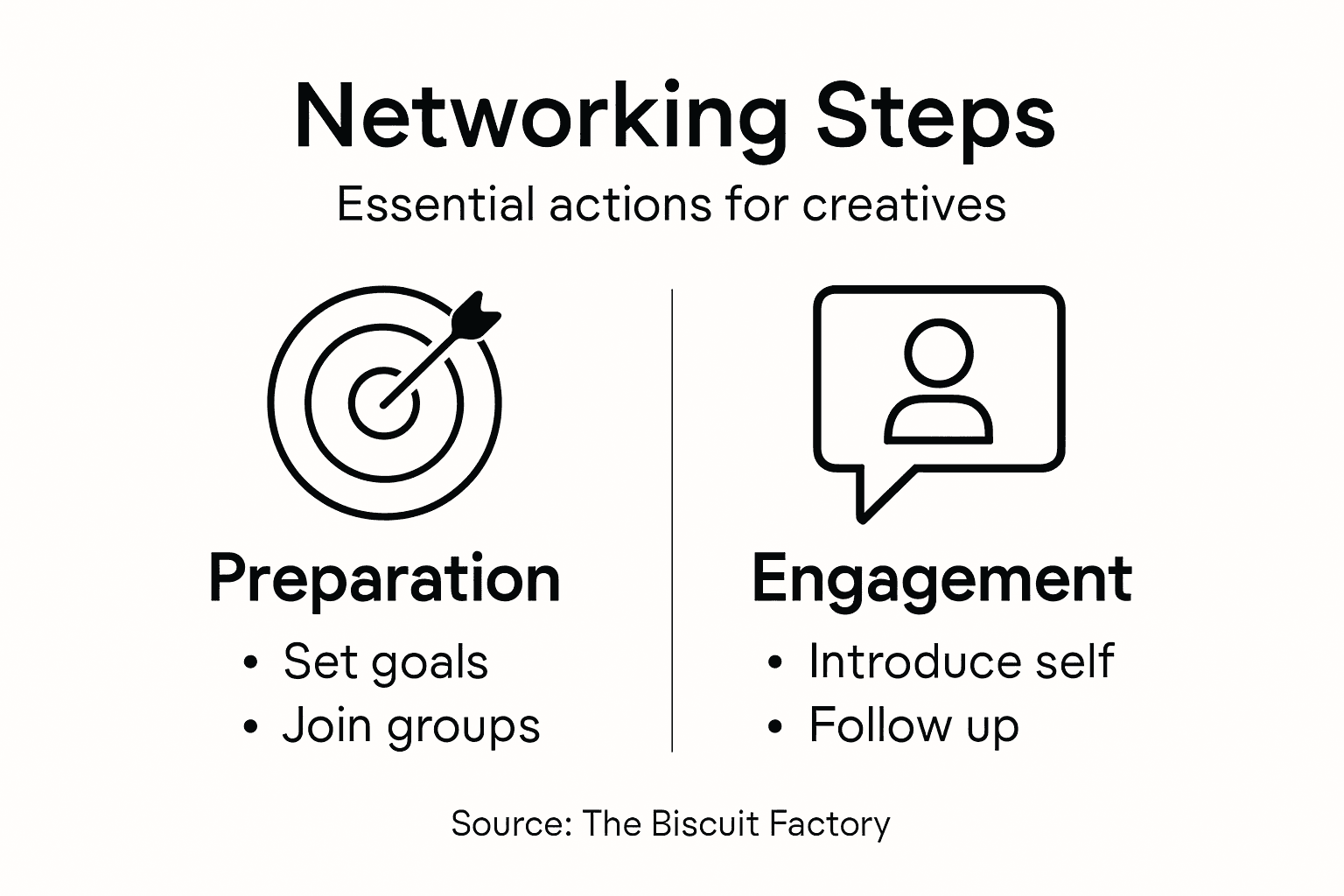
Creative communities of practice are essential platforms for innovation and collaborative learning. These communities provide spaces where creative professionals can connect, share insights, and support each other's professional growth.
When selecting relevant creative communities, consider the following key platforms:
- Professional social media networks (LinkedIn, Behance)
- Industry-specific online forums and discussion groups
- Local creative associations and meetup groups
- Virtual and in-person conferences
- Specialized workshops and collaborative events
- Podcasts and webinar communities
Strategic community selection means finding spaces that genuinely resonate with your creative discipline and professional aspirations.
The Creative Communities Toolkit recommends evaluating potential communities based on several critical factors:
- Relevance to your specific creative discipline
- Quality of member interactions
- Opportunities for meaningful collaboration
- Potential for professional development
- Alignment with your networking objectives
Remember that not all communities will be the right fit. Take time to explore different platforms, participate actively, and assess whether the community supports your professional growth and creative vision.
Pro tip: Attend at least three different community events or online forums before committing, to ensure they match your professional expectations and networking goals.
Step 3: Craft your personal creative introduction
Your personal creative introduction is your professional calling card. It's a powerful tool that can open doors, spark conversations, and create memorable first impressions in the creative industry.

Crafting a creative personal introduction involves more than just reciting your resume. It requires engaging storytelling that captures your unique creative essence and professional passion.
Consider these key elements when developing your introduction:
- A compelling personal narrative
- Clear description of your creative discipline
- Unique value proposition
- Authentic representation of your professional identity
- Potential conversation starters
- Memorable descriptive language
A great introduction transforms a routine meeting into an opportunity for meaningful connection.
Self-introductions should balance professionalism with personal insights. Your goal is to help others quickly understand who you are creatively and what drives your work.
Structure your introduction like a mini-story. Start with an intriguing statement about your creative journey. For graphic designers, this might sound like: "I discovered design isn't just about making things look good, but about solving complex communication challenges." For musicians, you might say: "Every composition I create is a conversation between emotions and sound."
Tailor your introduction to your specific audience. A pitch at a design conference will differ from one at a local creative meetup. The key is adapting your narrative while maintaining your authentic professional identity.
Pro tip: Practice your introduction in front of a mirror, recording yourself to refine your delivery and ensure it sounds natural and engaging.
Step 4: Engage authentically with peers and mentors
Authentic engagement is the cornerstone of meaningful professional relationships in the creative industry. It's about building genuine connections that go beyond surface-level interactions and create lasting professional networks.
Peer mentoring requires accessibility and empathy with a focus on mutual respect and trust. Your goal is to create meaningful interactions that benefit both parties and foster professional growth.
Key strategies for authentic engagement include:
- Active and empathetic listening
- Showing genuine curiosity about others' work
- Offering sincere and constructive feedback
- Maintaining professional boundaries
- Sharing your own experiences transparently
- Being reliable and consistent in your interactions
Authentic engagement transforms professional connections from transactional encounters into collaborative relationships.
Effective mentorship demands clear communication and mutual understanding. When approaching potential mentors or peers, focus on building genuine relationships rather than simply extracting professional advantages.
Approach interactions with a learning mindset. Ask thoughtful questions about their creative journey, challenges they've overcome, and insights they've gained. Share your own experiences candidly, demonstrating vulnerability and openness to growth.
Remember that networking is a two-way street. Be prepared to offer support, resources, or connections to others, not just seek opportunities for yourself. Generosity and authenticity are the real currencies of professional networking.
Pro tip: Follow up after meaningful conversations with a personalized message that references a specific detail from your interaction, showing you were truly present and engaged.
Step 5: Follow up and track your networking success
Networking doesn't end when the conversation stops. The real magic happens in the strategic follow-up and intentional relationship maintenance that transforms initial connections into meaningful professional opportunities.
Following up after networking is critical to converting brief interactions into lasting professional relationships. Your approach should demonstrate genuine interest and professional courtesy.
Effective follow-up strategies include:
- Send personalized thank-you messages within 48 hours
- Reference specific conversation details
- Share relevant resources or insights
- Connect on professional social media platforms
- Schedule a brief follow-up call or coffee meeting
- Offer assistance or value to your new contact
Consistent and thoughtful communication transforms casual encounters into strategic professional connections.
Track your networking progress systematically by maintaining a detailed contact management system. Consider using spreadsheets or digital tools to record:
- Contact name and professional details
- Date and context of initial meeting
- Key discussion points
- Follow-up actions taken
- Potential collaboration opportunities
- Next recommended contact date
Remember that quality trumps quantity in professional networking. Focus on nurturing a few meaningful connections rather than collecting hundreds of superficial contacts. Each interaction is an opportunity to build a genuine professional relationship.
Pro tip: Create a monthly review ritual where you assess your networking efforts, reflecting on new connections made and potential opportunities generated.
Here's an overview of follow-up methods and their impact on sustaining creative relationships:
| Follow-Up Method | Response Speed | Relationship Impact |
|---|---|---|
| Personalized Thank-You | Within 48 hours | Builds trust quickly |
| Sharing Resources | 1-3 days | Demonstrates value |
| Scheduling Meetings | 1-2 weeks | Promotes ongoing dialogue |
| Monthly Check-In | Every 4 weeks | Maintains active connection |
Unlock Your Creative Networking Potential with The Biscuit Factory
Building authentic connections in the creative industry can feel overwhelming and time-consuming. The article highlights key challenges like defining specific networking goals, crafting compelling personal introductions, and maintaining meaningful follow-ups. If you are struggling to turn networking opportunities into real business growth or wondering how to engage genuinely with peers and mentors The Biscuit Factory offers the practical support and collaborative community you need. Our platform is designed to help Irish artists, makers, and creative entrepreneurs move beyond superficial contacts toward profitable and lasting relationships.
Take control of your networking success today by joining The Biscuit Factory. Gain access to live coaching sessions, targeted workshops, and detailed resources that guide you on setting clear objectives, engaging authentically, and tracking your progress. Experience a supportive space free from algorithms where expert advice and peer connections strengthen your confidence and business planning skills. Don’t let your creative journey stall because of missed networking opportunities—start building a thriving network that fuels your growth now.
Frequently Asked Questions
What are the first steps to define my networking objectives as a creative?
Successful networking begins with clear objectives. Identify what you want to achieve, such as finding clients, exploring collaborations, or seeking mentorship. Write down three specific goals to guide your networking efforts.
How can I select the right creative communities to join?
Choose communities that align with your networking goals and creative discipline. Research different platforms like professional social media networks or local meetup groups, and evaluate their relevance and member interactions. Attend events to determine which community feels like the best fit.
What should I include in my personal creative introduction?
Develop a compelling introduction that captures your unique creative essence and professional passion. Include your creative journey, what you do, and what makes your work valuable, all while crafting it like a mini-story to make it memorable in conversations.
How can I engage authentically with peers and mentors?
Focus on building genuine connections by actively listening and showing curiosity about others' work. Ask thoughtful questions and share your own experiences transparently to establish trust and mutual respect in your interactions.
What are effective follow-up strategies after networking events?
After networking, send personalized thank-you messages within 48 hours to reinforce relationships. Reference specific details from your conversation and suggest a follow-up meeting or share valuable resources to keep the dialogue going.
How can I track my networking progress over time?
Maintain a detailed contact management system by recording key details about your networking interactions, such as contact information, discussion points, and follow-up actions. Regularly review this information to assess your progress and identify new opportunities, ideally on a monthly basis.