

Many Irish creative entrepreneurs struggle with turning their artistic passion into a sustainable, profitable business. Structured business plans increase growth rates by 30% compared to those without clear planning. This guide provides tailored strategies to help Irish makers and artists build actionable business plans that drive profitability and confidence in 2026.
Key takeaways
| Point | Details |
|---|---|
| Tailored planning is essential | Irish creatives need business plans that align artistic vision with practical pricing and market realities. |
| Clear goals drive profit | Measurable objectives combined with strategic pricing directly improve income within 6 to 12 months. |
| Community amplifies success | Peer support, coaching, and collaborative feedback refine plans and boost execution confidence. |
| Avoid common pitfalls | Poor pricing, ignoring regulations, and vague goals reduce success rates significantly. |
| Growth is achievable quickly | Well-structured plans can deliver measurable business growth within one year. |
Introduction to creative business planning in Ireland
Creative business planning for Irish entrepreneurs means building a structured roadmap that balances artistic integrity with commercial viability. It involves setting clear goals, developing pricing strategies, and creating marketing plans tailored to Ireland's unique creative market. This approach transforms passion into sustainable income while preserving creative authenticity.
Ireland's creative sector is experiencing remarkable growth. Digital creative industries are expected to generate over 20,000 jobs and €1.4 billion in economic value by 2026, creating unprecedented opportunities for makers and artists. Government support programmes and funding initiatives are actively encouraging creative entrepreneurship across the country.
However, Irish creatives face distinct challenges. Rising employment costs, digital transition pressures, and competitive markets require strategic planning. Most small businesses recognise tailored planning as essential to navigate these cost pressures effectively.
The economic context in 2026 favours prepared entrepreneurs. With supportive government policies and growing consumer interest in Irish-made products, creatives who plan strategically can capture market share rapidly. Budget 2026 introduced several supports specifically designed to help small creative businesses thrive.
Key factors shaping Ireland's creative landscape include:
- Increased digital market opportunities and online sales channels
- Government grants and tax incentives for creative enterprises
- Growing consumer preference for locally-made, authentic products
- Rising operational costs requiring efficient financial planning
- Competitive pressures demanding professional business approaches
A solid business plan provides clarity in this dynamic environment. It helps you anticipate challenges, allocate resources wisely, and measure progress against specific targets. Without this structure, even talented creatives struggle to achieve consistent profitability.
Prerequisites and preparation for effective business planning
Before building your business plan, establish a strong foundation. Clear preparation dramatically improves planning outcomes and execution success.
Start by defining your creative vision. What drives your work? Who benefits from your products or services? Your artistic purpose should inform every business decision. This clarity prevents you from chasing opportunities that dilute your brand or compromise your values.
Business planning templates and goal-setting worksheets improve strategy execution by providing structured frameworks. Gather these tools before starting your plan. Templates save time and ensure you address all critical business elements systematically.
Understand Irish-specific requirements. Familiarise yourself with VAT registration thresholds, income tax obligations for self-employed creatives, and any relevant industry regulations. This knowledge prevents costly compliance mistakes later. Resources like The Biscuit Factory business planning tools offer Ireland-focused guidance.
Mindset preparation is equally important. Successful planning requires:
- Commitment to honest self-assessment about strengths and weaknesses
- Openness to feedback from peers and mentors
- Willingness to adjust strategies based on market response
- Patience to implement plans consistently over time
- Courage to set ambitious yet achievable goals
Organise your financial information. Gather past sales data, expense records, and pricing information. This historical data informs realistic projections and highlights improvement areas.

Pro Tip: Schedule dedicated planning time away from daily operations. Treat this as a priority appointment with yourself. Planning during quiet periods when you're mentally fresh produces better results than squeezing it between customer orders.
Identify your support network before you begin. Which peers, mentors, or communities can provide feedback? Having reviewers lined up ensures you'll refine your plan through collaboration rather than working in isolation.
Step-by-step business plan creation for creatives
Building an effective business plan follows a logical sequence. Each step builds upon the previous one, creating a comprehensive roadmap for growth.
1. Define your creative mission
Start with your WHY. Write a clear mission statement explaining what you create, who you serve, and what makes your work distinctive. This becomes your North Star for all decisions. Keep it concise but meaningful.
2. Set measurable goals
Establish specific, time-bound objectives. Instead of "increase sales," aim for "achieve €30,000 revenue by December 2026." Break annual goals into quarterly milestones. Include both financial targets and creative objectives like launching new product lines or expanding your skills.
3. Develop your pricing strategy
Pricing makes or breaks profitability. Tailored pricing strategies significantly improve revenue streams for creative products. Calculate your true costs including materials, time, overheads, and desired profit margin. Research competitor pricing and customer willingness to pay. Use tools like the pricing & profit calculator to ensure your prices cover costs while remaining competitive.
| Pricing Component | Calculation Method | Example |
|---|---|---|
| Material costs | Direct product expenses | €15 |
| Labour costs | Hours × desired hourly rate | €45 (3 hours × €15/hour) |
| Overheads | Rent, utilities, marketing allocation | €10 |
| Profit margin | Target percentage on costs | €21 (30% of €70) |
| Final price | Sum of all components | €91 |
4. Create marketing and sales strategies
Identify your ideal customers. Where do they spend time online and offline? Develop a marketing plan using channels they frequent. Focus on three to five tactics you can execute consistently rather than spreading efforts too thin.
Outline your sales process. How will customers discover, evaluate, and purchase from you? Map this journey and identify where you can improve conversion rates.
5. Plan your income allocation
Decide how revenue will be distributed. A common framework for creatives: 50% for costs and supplies, 30% for personal income, 20% for business growth and taxes. Adjust percentages based on your specific situation.
6. Establish monitoring systems
Determine which metrics you'll track monthly. Revenue, profit margin, customer acquisition cost, and repeat purchase rate are essential. Set calendar reminders to review these metrics and adjust strategies accordingly.
Pro Tip: Review and update your plan quarterly. Markets shift, costs change, and opportunities emerge. Rigid plans fail while flexible frameworks adapted regularly succeed. Schedule 90-day reviews to assess progress and refine tactics.
Utilising community support and practical resources
No creative entrepreneur succeeds alone. Community support and specialised resources dramatically improve business planning outcomes and execution success.
Live coaching provides expert guidance tailored to your specific challenges. Professional business coaches help you identify blind spots, refine strategies, and maintain accountability. Regular coaching sessions keep you on track when motivation wanes or obstacles arise.
Peer feedback offers invaluable perspectives. Fellow creatives understand your unique challenges and can spot opportunities you might miss. They provide honest assessments of your pricing, marketing messages, and product offerings based on their own experiences.
Membership platforms designed for Irish creatives offer concentrated value. These communities provide:
- Access to proven templates and planning frameworks
- Regular workshops covering pricing, marketing, and sales
- Troubleshooting support when plans encounter obstacles
- Accountability through shared goal-setting sessions
- Networking opportunities with potential collaborators
The arts community and peer support available through dedicated platforms helps you refine plans through collaboration. Engaging with peers who share your journey accelerates learning and prevents common mistakes.
Community engagement directly improves execution. When you share your goals publicly within a supportive group, commitment increases. Regular check-ins with accountability partners ensure consistent action rather than abandoned plans.
Motivation naturally fluctuates when running a creative business. Community connection provides encouragement during difficult periods. Celebrating wins together and receiving support during setbacks sustains long-term effort.
Irish creative communities specifically understand local market conditions, regulations, and opportunities. This localised knowledge proves more valuable than generic business advice. Business planning resources tailored to Irish entrepreneurs address the specific challenges you face.
Make community participation part of your planning process. Schedule regular engagement just as you would any business task. The insights gained and relationships built become assets as valuable as any planning template.
Common mistakes in creative business planning and how to avoid them
Avoiding frequent pitfalls dramatically increases your planning success. Understanding these errors helps you build stronger, more effective business strategies.
Neglecting pricing strategy, underestimating costs, and failing to set measurable goals reduce success rates significantly. These mistakes are preventable with awareness and proper tools.
Inadequate pricing undermines profitability
Many creatives underprice their work, valuing it based on materials alone rather than including time, expertise, and overheads. This guarantees financial struggle regardless of sales volume. Calculate comprehensive costs and add appropriate profit margins. Test pricing with actual customers rather than guessing what they'll pay.
Underestimating costs and timelines
Optimism feels natural when planning, but unrealistic projections create problems. Budget for unexpected expenses by adding 15 to 20% contingency to cost estimates. Similarly, timeline estimates should include buffer time for delays and revisions. Projects consistently take longer than initially planned.
Setting vague, unmeasurable goals
Goals like "grow my business" or "get more customers" provide no actionable direction. Without specific targets, you cannot assess progress or adjust strategies effectively. Transform vague aspirations into measurable objectives with clear deadlines and numerical targets.
Ignoring Irish regulations and tax obligations
Market-specific regulations and taxation nuances cause compliance issues when ignored. Familiarise yourself with VAT thresholds, income tax requirements, and any creative industry-specific regulations. Budget for tax obligations from the start rather than facing unexpected bills later.
Failing to monitor and adjust
Creating a plan then filing it away guarantees failure. Business conditions change constantly. Successful entrepreneurs review metrics regularly and adjust tactics based on results. Schedule monthly reviews minimum.
Key strategies to avoid these pitfalls:
- Use professional pricing calculators and templates
- Seek feedback from experienced mentors
- Build realistic timelines with contingency buffers
- Invest time learning Irish tax and regulatory requirements
- Establish regular plan review and adjustment schedules
"The difference between businesses that thrive and those that struggle often comes down to avoiding these fundamental planning mistakes. Proper preparation and ongoing monitoring transform good intentions into profitable reality."
Expected results and outcomes from effective business planning
Structured business planning delivers measurable, tangible results for Irish creative entrepreneurs. Understanding realistic timelines and growth benchmarks helps you set appropriate expectations.
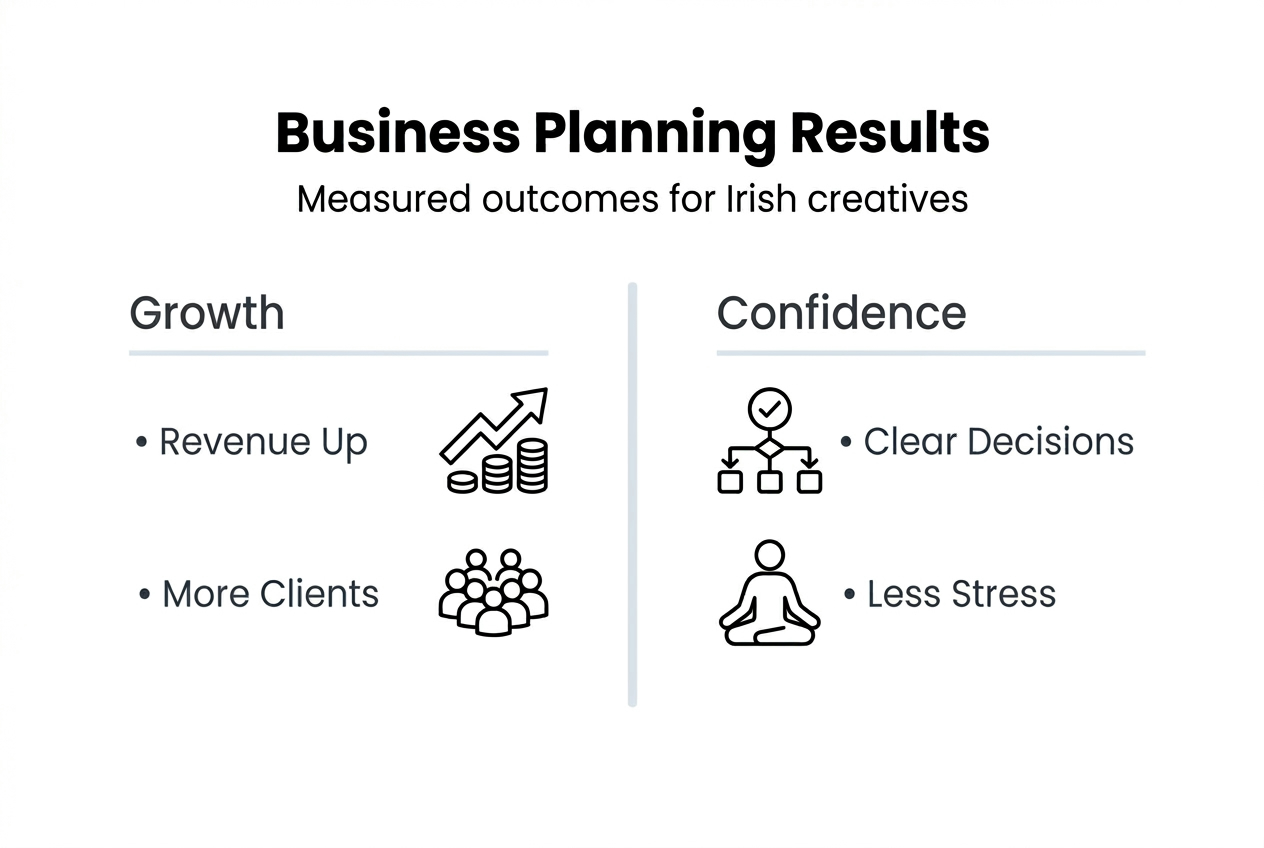
Business plans increase growth likelihood by 30% compared to unplanned businesses. This significant advantage stems from clearer direction, better resource allocation, and consistent execution.
Measurable results typically appear within 6 to 12 months of implementing a solid plan. This timeline assumes consistent effort and regular plan adjustments based on market feedback. Early wins often include improved pricing confidence, streamlined operations, and increased customer acquisition.
Income growth represents the most obvious outcome. Creatives with structured plans report revenue increases of 25% to 50% within the first year. These gains result from strategic pricing, focused marketing, and efficient operations rather than simply working harder.
Client base expansion follows naturally from systematic marketing efforts. Instead of relying on word-of-mouth alone, planned outreach through targeted channels brings steady new customer flow. Repeat purchase rates improve when customer experience is deliberately designed rather than accidental.
| Outcome Area | Typical Timeline | Measurement Method |
|---|---|---|
| Revenue growth | 6 to 12 months | Monthly sales tracking vs baseline |
| Profit margin improvement | 3 to 6 months | Net profit percentage calculation |
| Customer base expansion | 6 to 12 months | New customer acquisition count |
| Operational efficiency | 3 to 6 months | Time spent on administrative tasks |
| Business confidence | Immediate to 3 months | Self-assessment and decision-making speed |
Confidence improvements appear quickly, often within weeks. Having a clear plan reduces anxiety and improves decision-making quality. You'll spend less time questioning directions and more time executing strategies.
Sustainable operations emerge as systems mature. Planned businesses develop repeatable processes for production, marketing, and customer service. This sustainability allows growth without constant crisis management.
Set realistic growth targets based on your starting point. A brand new business might aim for €20,000 in year one revenue, while an established creator could target doubling existing income. Both represent success when aligned with individual circumstances.
"Planning transforms hope into strategy. The creatives who invest time in structured business planning consistently outperform those who rely on talent alone. Your artistic skill deserves the support of solid business foundations."
Monitor progress monthly using key metrics. Celebrate wins while honestly assessing areas needing adjustment. Consistent measurement and refinement compound results over time, turning initial gains into sustained growth.
Explore practical tools and support at The Biscuit Factory
Taking your business plan from concept to reality requires the right tools and community support. The Biscuit Factory provides Irish creatives with specialised resources designed specifically for your unique challenges and opportunities.
Our creative pricing and profit calculator helps you establish profitable pricing that covers all costs whilst remaining competitive. This tool eliminates guesswork and ensures your beautiful work generates the income you deserve.
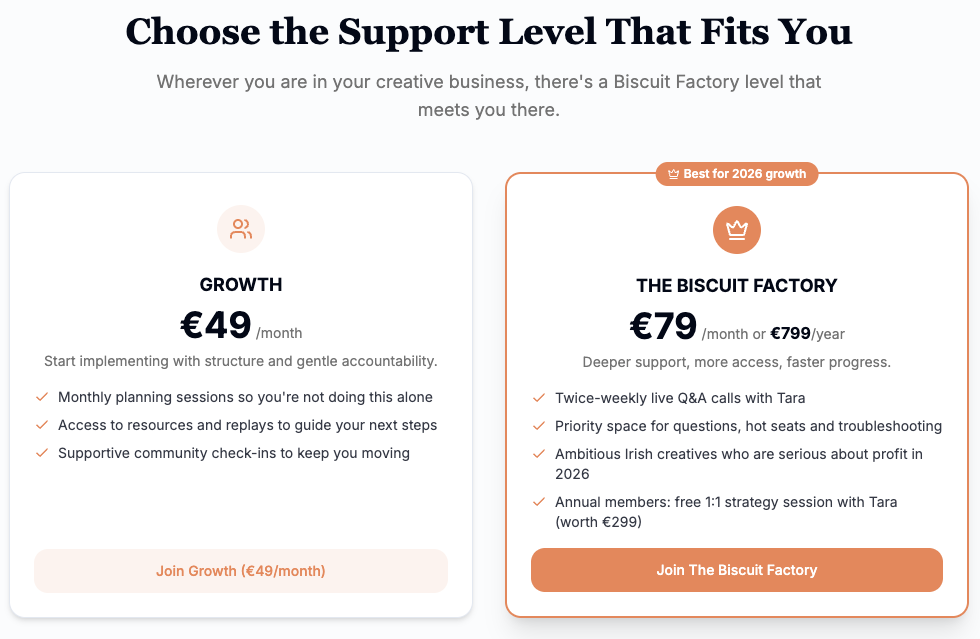
Join a vibrant community of Irish makers and artists through our members directory. Connect with peers who understand your journey, share insights, and celebrate successes together. Our community provides accountability, feedback, and encouragement that transforms isolated struggle into collaborative growth.
Access templates, workshops, and coaching specifically tailored to creative entrepreneurs. Visit The Biscuit Factory to explore membership options and put this guide's strategies into immediate action.
Frequently asked questions
What is the first step in creative business planning?
Start by clarifying your creative purpose and mission. Write down why you create what you do and who benefits from your work. This foundation guides every subsequent planning decision and keeps you aligned with your values as your business grows.
How can Irish creatives set effective pricing for their products?
Use tools like pricing calculators to factor in all costs including materials, time, overheads, and desired profit. Research local competitors and test pricing with real customers. Adjust based on sales data and customer feedback rather than assumptions about what people will pay.
What are common mistakes to avoid when planning a creative business?
Neglecting comprehensive pricing and setting vague goals significantly reduce success rates. Ignoring Irish tax obligations risks penalties and unexpected costs. Plan realistically with specific, measurable targets and seek guidance on local regulations. Build contingency into timelines and budgets.
How long does it take to see growth after creating a business plan?
With consistent implementation, measurable growth typically appears within 6 to 12 months. Early improvements in confidence and operations may surface within weeks. Sustained growth requires regular monitoring and plan adjustments based on market response and performance data.
Recommended
- The Biscuit Factory | Ireland's Independent Creative Community | The Biscuit Factory
- Pricing & Profit Calculator for Irish Creatives | €7.99 | The Biscuit Factory
- The Biscuit Factory - Ireland's Independent Creative Community | Irish Artists & Makers
- The Great Talent Shift: here’s why you should tap into Europe’s remote workforce - Cleverbit Software